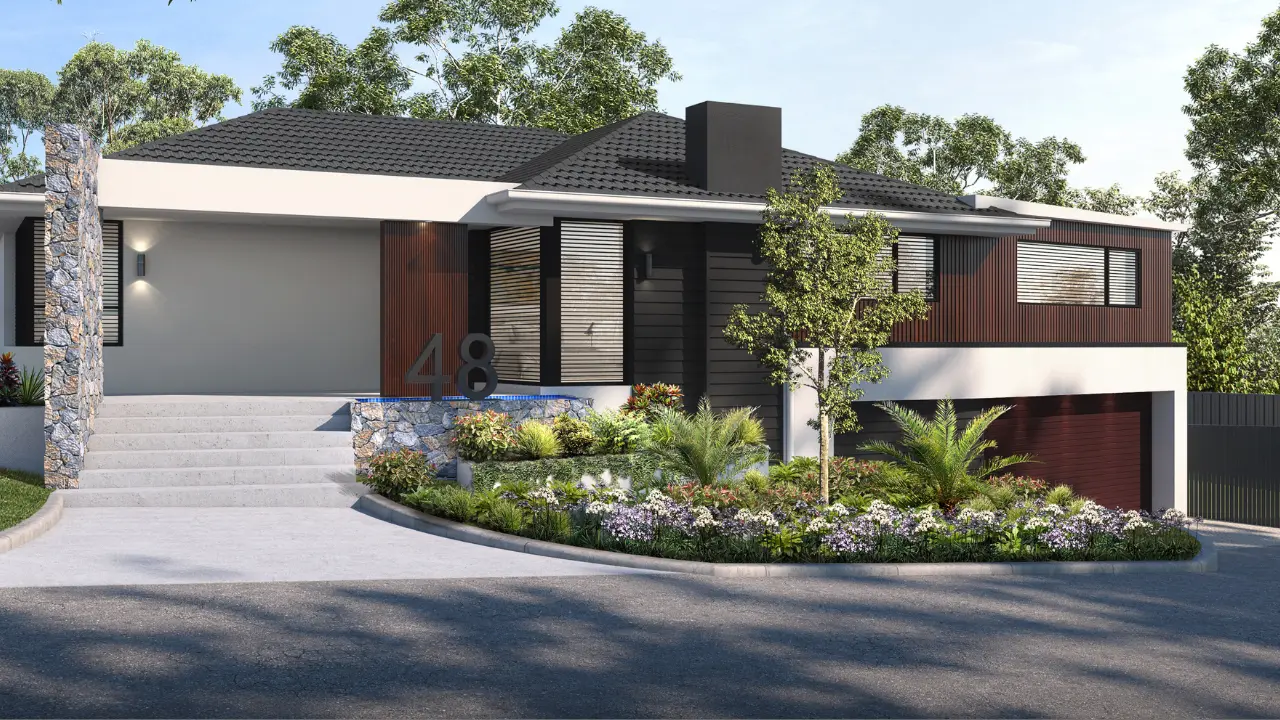
In part one, I talked about the very first steps you should take when planning a makeover. I gave you tips on how to get ideas and inspiration for your renovation and asked you to go out on the street to take a photo of your façade. I encouraged you to print out the photo so you could experiment with ideas by sketching in the changes over the top of the picture.
Now it’s time to get down to the nitty-gritty details of organising exactly what you are going to do, what order you are going to do it in, and how to allocate a budget for it.
Write out a definitive list of all the things you think you want to do.
This might include things you want to do immediately and things that can wait a bit longer. Include big-ticket items like painting, landscaping, replacing windows, guttering or roofing as well as smaller things like tidying garden beds, adding pot plants, repainting a door or changing door handles.
Divide the list into aesthetic changes and maintenance issues.
Now you have a clear list of everything that needs to be done and which category it falls into. (Some might crossover into both categories.) If you start with aesthetics, you might run out of money and be unable to rectify things that really need fixing, so begin planning the makeover by looking at your maintenance list.
Identify which items you are keeping and which you are replacing or changing. For example, you might have put guttering on the maintenance list. Are you just fixing sections of the guttering or are you changing the colour or the shape? At the top of the list, put maintenance items that only fall into the maintenance category and won’t be affected by aesthetic changes so these can be done first.
Cost estimates
Find out costs by doing some research online, talking to friends who have renovated and ringing tradies and hardware stores. You don’t need to get estimates that are correct to the last cent; ballpark figures will do at this stage. This will give you an idea of what is possible on your budget and help you to refine your ideas.
Plan the aesthetic side of your façade facelift
Just as you did with the maintenance side of the list, start by getting costings and prioritising jobs to be done on the aesthetic side of the list. Which items can be done now and which can wait? What areas overlap? For example, if you’re changing the colour of the house and adding a new portico, it makes sense to get the portico in place before painting or rendering begins.
Budgeting
Whether you are planning on just painting trims and window frames or doing significant changes like rendering or adding a portico, it’s quite important to consider where your house is and what it is worth before committing to a renovation budget. If you have a two-million-dollar house and you only plan on spending $3000 on the renovation, it’s probably not going to make a noticeable difference. Likewise, if you have a three hundred-thousand-dollar house, you will probably over capitalise if you spend $50 000 on a renovation. Of course, if it’s your forever home, you might spend a bit more than if you intend to sell sometime down the track.
Planning a renovation involves more than having a few ideas and colours picked out. A good renovation is achieved by using a system that combines logic, creativity and practicality. If you follow the advice given in Part One and Part Two of How to plan a fabulous façade makeover, you’ll be well on the way to starting your own fabulous façade facelift.
Join my Facebook Group ‘Home Renovators Network Australia’ (https://www.facebook.com/groups/HomeRenovatorsNetworkAustralia/) for feedback & ideas from other renovators as you update your own home’s façade.
Jane Eyles-Bennett is one of Australia’s top exterior designers and owner of design firm Hotspace Consultants. Join Jane in her Facebook group Home Renovators Network Australia for design and renovation inspiration and insider tips for your home improvement projects.
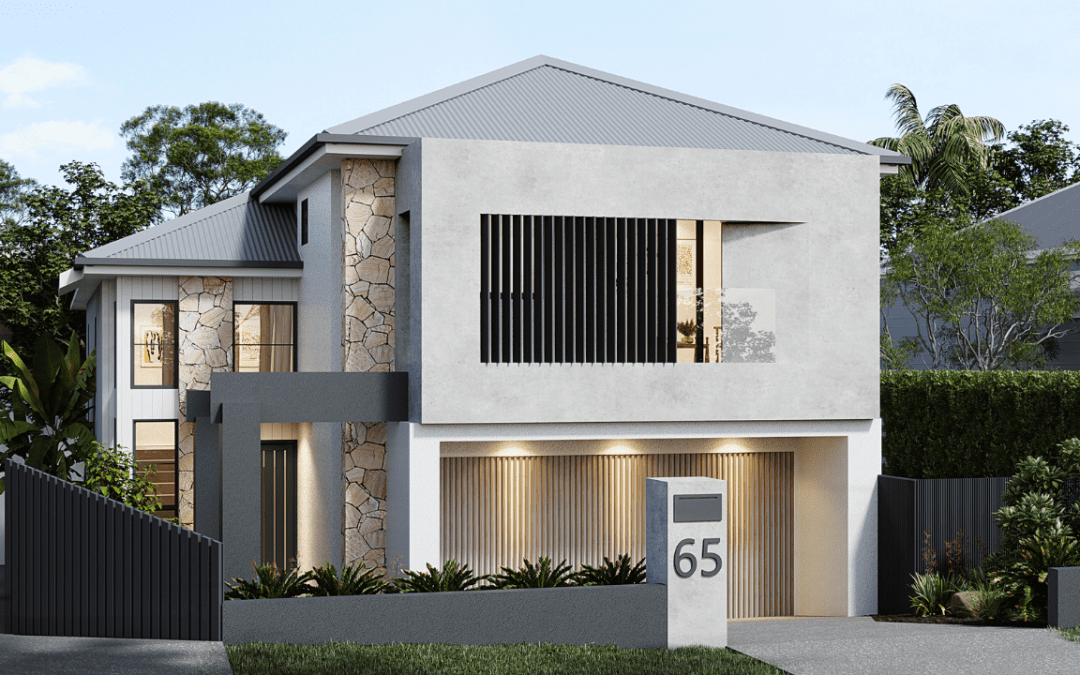
If you’ve got more time on your hands than usual at the moment, now might be a good time to start planning your façade makeover. Whether you’re keen to get in and do it all at once or you prefer to chip away at it bit by bit, you’ll need a plan.
Even if you’re not ready to begin the makeover, it’s an ideal time to formulate ideas while you have the time and space to plan things without the pressure of making quick decisions.
So, what is the best way to plan a façade renovation? Whether your reno is going to be small or large, the first step is the same.
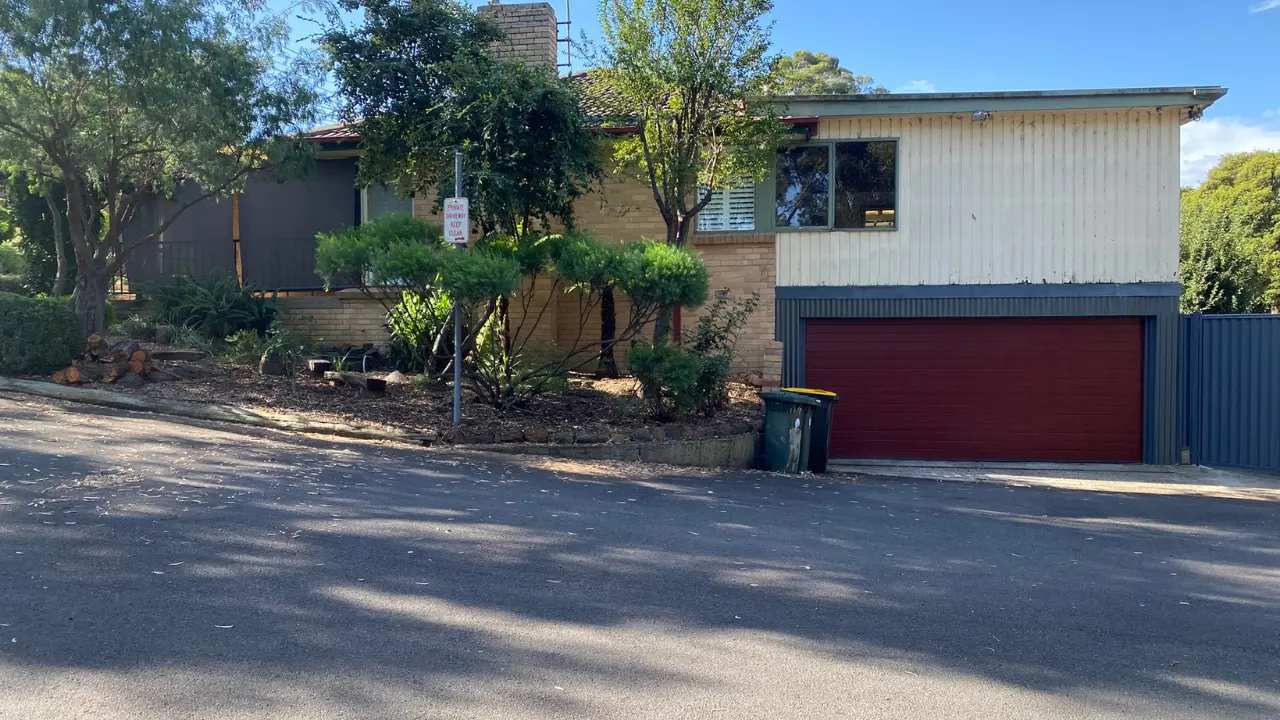
Stand on the street and take a photo of the house.
Why? Because it’s always a good idea to look at the ‘big picture’. Although you might think you have a clear idea of what you want, having a photo of the entire area to be redone can give you a fresh perspective.
Print the photo out.
Look at the photo objectively. What is wrong with the current composition, and what can you do to alter it? Having the photo in front of you can help pinpoint areas you didn’t realise needed attention. You might even find that some things that bother you are less intrusive (and so less of a priority to change) when looked at within the whole picture.
Get Inspired
With your photo printout by your side, start looking at websites like Pinterest to get some ideas together. Focus your attention on houses you like that are architecturally similar to yours, e.g. if you have a 70’s style timber home, look at other already renovated 70’s style timber homes; if you have an 80’s square brick house, look at makeovers done on square brick houses.
Don’t just look at the colours or landscaping. Look at the combination of materials used to achieve a particular look. Maybe they added pots and plants, did some rendering, or used a darker colour on frames and windows with a lighter coloured roof. Identify why it all works well together.
Get creative
Something I like to do (and I encourage my clients to do) is to get the photo out and start sketching on it. Sketching over the top of the photo helps you to see what your renovation might end up like. Even if you aren’t comfortable drawing, just start drawing lines and making notes so you get a bit of a feel for what is possible.
Sketch in things you are considering doing. Are you going to put a portico on one side or are you going to add a window? Are you going to square off the archways? Are you going to add a fence, plant a hedge or change the landscaping? Just do some basic drawing and gauge how it works in relation to symmetry, composition and aesthetic balance.
Once you have a clear idea of what you want to change, you can start planning details like deciding what materials and products you would like to use.
Stay tuned for part two of How to plan a fabulous façade makeover, where I provide the second part of an actionable plan for you to follow.In the meantime , join my Facebook Group ‘Home Renovators Network Australia’ (https://www.facebook.com/groups/HomeRenovatorsNetworkAustralia/) for feedback & ideas from other renovators as you gather ideas to update your own home’s façade.
Jane Eyles-Bennett is one of Australia’s top exterior designers and owner of design firm Hotspace Consultants. Join Jane in her Facebook group Home Renovators Network Australia for design and renovation inspiration and insider tips for your home improvement projects.
If I were to survey a group of renovators and ask them what they thought was the best way to transform their home’s façade, chances are I would get a range of responses including repainting, re-cladding, rendering, fencing, landscaping, or updating driveways and pathways.
All of these are effective and will go a long way towards modernising a tired house exterior. However, I believe there’s one key change that will improve many house façades more than anything else.
It’s a change that often isn’t even considered; dismissed as being too costly or difficult. Can you guess what it is?
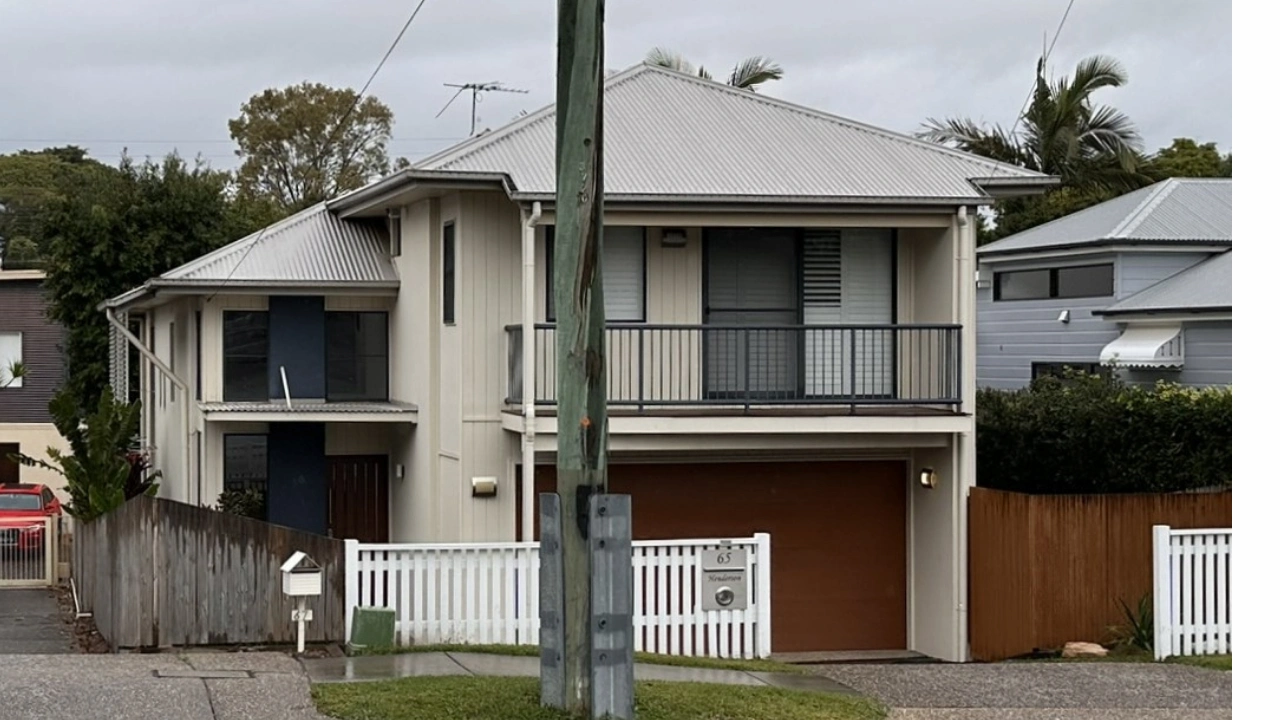
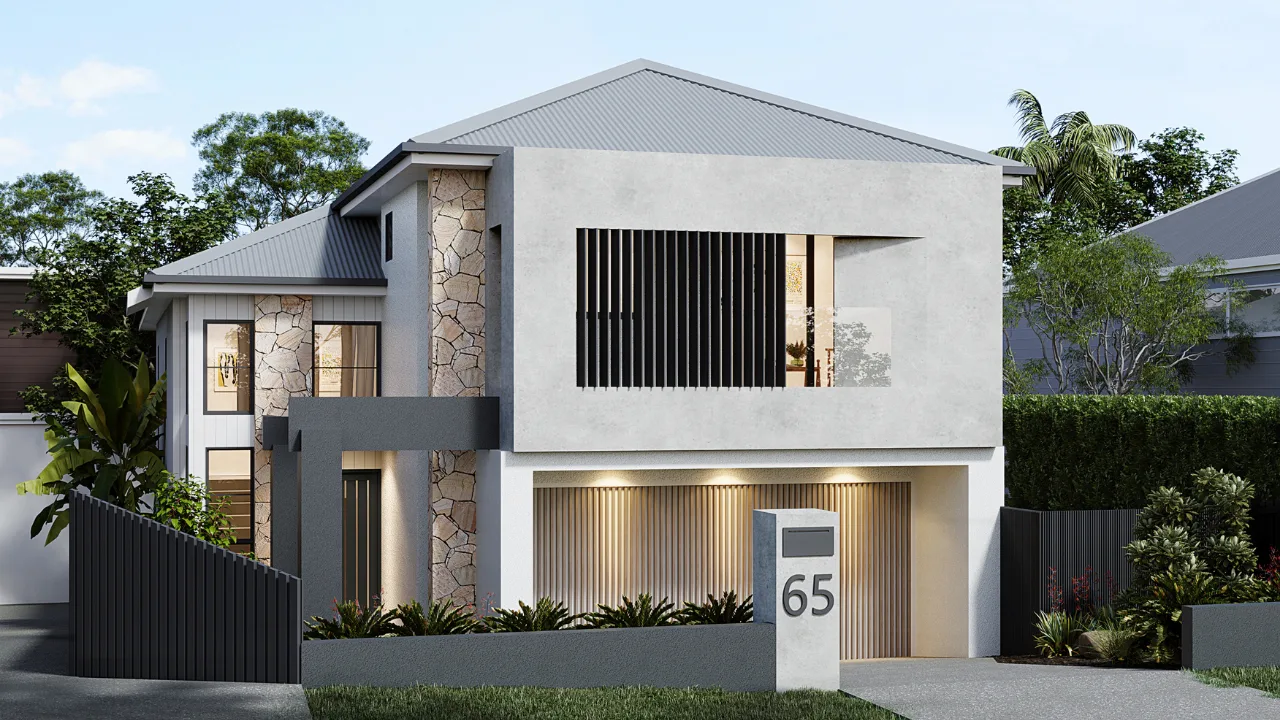
[twenty20 img1=”4716″ img2=”4710″ width=”100%” offset=”0.2″]
… a tweak to the roofline (stay with me here!).
Now, you may be thinking that adjustments to your roof are too difficult or out of your budget, but that is usually not true. I’m not talking about replacing your entire roof; I’m talking about minor tweaks or additions to your existing roof-line that can completely change the look and feel of your home’s facade.
As a specialist façade designer, this is one of the ways I help home owners transform their facades. About 1/3rd of the renovation designs we’ve done for clients in the past year have incorporated a modification to the roof-line. It really helps to achieve a contemporary look!
Making clever changes gives your home visual interest by providing a better focal point, and adding depth and contrast to the house. Unfortunately, it’s the one crucial element that’s missing from most DIY home renovations.
Take a look at the roof on most 60’s, 70’s and 80’s homes. Now compare those roofs to newer home roofs. You’ll see that instead of a simple roofline without any other features, the more modern homes often have varying roof heights and directions.
If you can make even a small adjustment to your roofline, it will transform your home. This might be a portico roof or some sort of structure over the entry point. Just make sure that whatever you do links with the rest of your renovation so that everything has coherence and style.
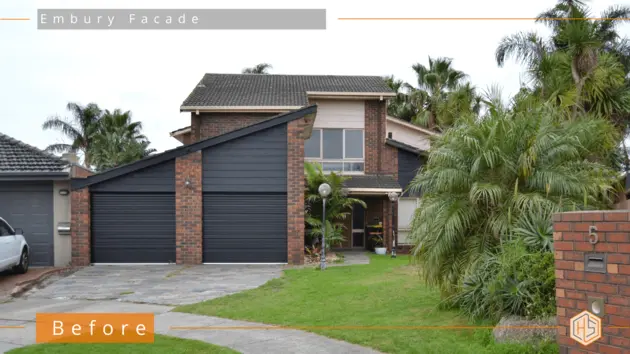
You can see in the before and after photos above, where we created a walkway to the entrance by adding a skillion roof to the new carport that will fly over to the older roof on the house. The end result will completely transform and modernise this façade.
Imagine if we’d kept the roofline the same as what it was.
Tweaking your home’s roof is not the only way to update the look, but it is one of the most effective ways to complete a renovation and if done well, always results in giving the house a far more striking and stylish presentation without massive costs.
Jane Eyles-Bennett is one of Australia’s top exterior designers and owner of design firm Hotspace Consultants. Join Jane in her Facebook group Home Renovators Network Australia for design and renovation inspiration and insider tips for your home improvement projects.

I’m about to disillusion numerous home renovators here, but the truth must be told: painting your facade and landscaping your yard is not enough to truly transform the exterior of your property.
Painting will certainly refresh the look and give it a more modern appearance, but it’s like putting on a new jacket; it looks great, but underneath your figure is the same.
What I have learnt over the years is that landscaping and painting accounts for approximately 30 to 40 per cent of what needs to be done to truly transform a home’s facade. The real magic happens when painting and landscaping are supplemented by other clever modifications.
Changes that complement your facade are the difference between a makeover that is clearly DIY, and one that has designer dazzle.
This doesn’t mean you have to give your home a major overhaul and make expensive architectural changes. The best transformations often come from subtle and inexpensive alterations over and above what you were intending to do anyway – but the difference they make can be huge.
These could be updated paving, fencing and cladding, mature plantings, modernised garage doors, a fresh front door, and a mailbox that has design flair as well as function.
For example, if you were going to spend $30,000 to $40,000 on painting and landscaping your home anyway, adding a few extra modifications that might cost somewhere between $15,000 and $20,000 could be enough to give your home a completely new look (and add a lot more value than a simple paint and landscape update).
The biggest issue for home renovators is that they don’t even realise there are other ways to transform a house.
They assume that the only other option is to go to an architect who will give them over-the-top, and expensive ideas. You can achieve a predictably good result, no matter the style, location, condition or value of your home; and an exterior designer will help you, using well-considered touches of colour, materials and landscaping, composed together in a strategic way.
Jane Eyles-Bennett is one of Australia’s top exterior designers and owner of design firm Hotspace Consultants. Join Jane in her Facebook group Home Renovators Network Australia for design and renovation inspiration and insider tips for your home improvement projects.
To render or not to render is one of the biggest decisions facing renovators of brick homes.
On the surface, the pros and cons appear to be fairly straightforward. On the plus side, rendering can cover old-fashioned bricks and freshen up the facade. However, on the negative, there is always maintenance to be done because render tends to crack and deteriorate over time.
But it’s often not as simple as that. Rendering won’t deliver the beautiful facade a home owner was hoping for without actually assessing what is wrong with the facade in the first place.
Typically, a renovator will render a blocky 1970s, ’80s or ’90s brick home and not do anything else. Even if they have gone one step further and painted the gutters and front door, or done the garden up a bit, it still ends up looking like the same house, just in a different colour.
In part, this is because older style brick houses have those skinny windows, often in bronze or silver-anodised finish or cream powder-coated. This window style usually gives the house quite a flat appearance.
When the house is rendered (even if the windows are repainted), the entire facade becomes one featureless surface with little that adds interest or appeal.
To really give a home a designer-style makeover, begin by determining what aspects of the home aren’t working.
It may not be all the bricks’ fault. For example, a lot of older brick houses don’t have a clear focal point at the front. A good facade design can fix this by incorporating elements that will emphasise the front entrance so that the eye is naturally drawn towards the front door.
Consider adding a feature wall or a portico or some sort of roof structure above the entrance so that the entrance gains some dimension, depth and focus.
The most common reason for rendering is to cover up old-fashioned or unattractive bricks. The downside is that while rendering might give the house a better colour, you lose the visual interest that the mortar lines and texture of the bricks bring.
With a bit of creativity and planning, you can add this texture and interest back into the look of the house by adding some other elements. You might even retain some of the bricks and integrate them into your facade design.
However you choose to update your house, it pays to be respectful of its heritage (yes, even if it’s a ’70s or ’80s box). You can still achieve a modern design, but incorporate some elements that give a nod to the era the house was built in.
For example, you might incorporate door handles from that era or add a timber feature that is both modern and reflective of that time period. It’s not about compromising on a modern look, but about blending the old with the modern to achieve a new one.
Achieving a great facade for an older brick home requires more than just updating the windows, choosing a nice colour for the render and overhauling the garden.
It’s about introducing new materials and combinations of materials in such a way that they transform an otherwise flat and featureless house into something with texture, depth and visual interest.
Jane Eyles-Bennett is Australia’s only exterior designer specialising in house facades. Click here to view a selection of Before and After facade designs, created for clients of her business Hotspace Consultants.

When it comes to updating your home, it’s important to make sure the style you choose for your renovation suits not only your personal style, but the original character of the house.
I’m sure you’ve seen plenty of homes where the colours and materials chosen to supposedly “update” the house have not worked at all.
There are a million and one different styles, ideas, colours and concepts to choose from when renovating, so how do you know which ones to go with? Nothing screams “devalued” like a disjointed and aesthetically challenged facade, so getting these choices right is imperative.
No amount of money will improve the kerb appeal of your home if you don’t get the basics of the design right. Colours are only a small percentage of what makes up a beautifully designed home exterior.
The houses with the best street appeal look great because of the materials and colour selections that have been used — and how they are composed together on the house, yard and fences.
Focusing on one design style when renovating your facade is a great way to streamline your ideas and eliminate the risk of ending up with clashing elements and no unifying style.
Another bonus of focusing on one design style, and ultimately creating a much more appealing looking home, is the value you can add to your property.
A great place to start is by gathering images of your favourite design and style. This usually begins as a project filled with excitement about what is possible, but it is easy to become overwhelmed.
The trick to identifying one design style or theme for your renovation is to start wide, then narrow down. Gather all the images you can find that you like. This might be 50 or 100 photos – or even 200 or more.
Next, go through your images and see if you can pinpoint a common thread that runs through them. You might find you’ve pinned lots of contemporary homes with splashes of timber and grey. Or perhaps the majority of your pics are a combination of modern and Hamptons style.
It could be any number of style, colour and material combinations that run through your photos as a common theme. Even if you don’t know the name of the style, the important thing here is to group similar images together.
Once you’ve identified the most prevalent style in your collection of images, eliminate any that don’t fit with that range.
The great thing about this process is that you are narrowing down your choices of what you can do to your home by only giving yourself renovation options that fit within your most favoured design style. Confusion and feeling overwhelmed – be gone!
To work out ways of incorporating some of the ideas you’ve gathered, take particular note of what colours, materials and products have been used – and also how they have been composed together to create the look you’re drawn to.
Never start your renovation by picking out individual things from random images and applying them to your design.
That will almost always end up looking like a mismatch of unrelated styles patchworked together. Always start with identifying your design style first so that the final result is a collage of cohesive elements that all work together to create a beautiful space, area or facade.
Jane Eyles-Bennett is one of Australia’s top exterior designers and owner of design firm Hotspace Consultants. Join Jane in her Facebook group Home Renovators Network Australia for design and renovation inspiration and insider tips for your home improvement projects.