Own a modern home with zero personality?
Your problem is probably not the colour scheme. It’s the lack of interesting detailing and texture that would otherwise bring your home to life.
The most attractive homes not only incorporate a great colour scheme, they have an eye-catching combination of materials, accents and landscaping that offer warmth and interest and just make it pop! Time and again in my job as an exterior designer, I am charged with adding spunk and sizzle to a flat and uninteresting house facade. Here are some of the ways I do it!…
1) Add some feature cladding in a contrasting colour. Make sure it has texture (slats, stipples etc) that compliments your existing wall surfaces
2) Add warmth with timber-effect accents. Try to use this in more than one area on your facade (aim to ‘sprinkle’ it three times across your facade).
3) Use a contemporary colour combination – typically whites and greys with pops of warmth
4) Define your front boundary line with landscaping or even just edging as a crisp ‘frame’
Jane Eyles-Bennett x
P.S If you’ve tried and not yet succeeded in coming up with a suitable solution for your home, perhaps it’s time to seek professional guidance. To find out if I can help you, contact me here.

Most people would love an ‘architecturally designed’ home. But what is it that makes it so? What are the ingredients for achieving a house facade that stands out for the right reasons?
The answer is simple: these houses adhere to the ‘Golden Design Rules’; a set of design principles that architects and exterior designers have been using for centuries.
So what are the Golden Design Rules, and how can you apply them to your property? As a professional exterior designer, here are my top 5 strategies you can try for yourself;
1. Balance
Getting a ‘balanced’ look on the front façade of your home is essential to a visually appealing effect – but can be tricky to recover from if you get it wrong.
This doesn’t mean that everything has to be symmetrical or equally spaced apart or anything like that, but there has to be some sense of proportion and spatial balance.
Take a look at a workers cottage vs a contemporary house with a skillion roof. Both achieve visual balance, but in entirely different ways.
2. House Materials and Textures
The materials and texture choices (cladding, stone, timber, landscaping) are a critical component of a designer looking home. Textures can be used to add interest to make a home more interesting (if currently quite ‘flat’ looking) or textures can be reduced to make a home look less chaotic.
You can use different materials and textures to accentuate some areas and downplay others. Personal preference definitely comes into play of course and should always be the primary driver when selecting your colours, finishes and textures.
The best way to update the façade of your home is to weave the look and materials you love, in with the existing shapes and materials of your home’s exterior.
Exterior colour choices
Getting the colour combination right for your exterior can make or break a renovation. It pays to think about what you are trying to achieve with the colour choices. Colours can be a clever way to provide depth, shorten, widen or lengthen spaces and you can also use it to camouflage or accentuate different elements. A common misconception is that a lick of paint will solve all, but a great looking home exterior goes much deeper than that.
Making the entryway your focal point.
One of the areas that many renovators forget to take into account is the entryway. You want your front entrance to draw the eye in and extend a welcome to family and friends. You could make a bold statement here or gently draw focus by using a colour that is a shade or two lighter or darker than the façade. Clever use of lighting and landscaping is also key to a designer-looking entry and façade.
Landscaping for maximum effect
There is more to landscaping than just filling up garden beds with a plethora of plants. Take another look at the architectural features of your facade. Is your house top heavy? Is it brick or timber? Is it high-set or low-set? Your landscaping needs to work with and anchor the house, so choose plants that will achieve this.
As a general rule of thumb, choose visually heavier looking plants if your home is made of a heavy material like brick. A house made of a lighter material like timber can get away with using daintier plants or going with plants that are less visually heavy.
Accomplishing a cohesive designer look for your façade is a complicated process (a lot more difficult than what it seems), but it is achievable if you employ these design tips.
Jane Eyles-Bennett x
P.S Want help achieving ‘architecturally designed’-type status for your home? Send me an enquiry here and I’ll see if I can help.
Whether it’s 50 shades of white or 50 shades of grey you’re faced with, picking colours for your home can send you in a spin. If you’re sick of going round in circles; here are a few tips.
Firstly, there’s no hard and fast rule about what looks good on a home. Of course lighter colours make things appear larger generally, and darker colours make things appear smaller, but don’t let those concepts guide you too much for your exterior renovation.
The main things to consider are;
1) The style you’re aiming for: If you want Hamptons coastal, then a dark grey isn’t going to cut the mustard. But if you want a contemporary bachelor pad, then dark grey could be the perfect choice. Have a look on Pinterest for some ideas.
2) Existing/remaining colours; What parts of your exterior are you changing and which are you leaving as is? It’s important to work with the colours you have. For example, if you have cream windows that you’re not planning to change, then consider a creamier based light grey or cream/white colour to go alongside. A bright white will only highlight the yellowness of the cream. If you have warm colours already, stick to warm colours. If cool colours, stay with cool colours.
3) Climate; If you live in the Northern Territories, then a dark roof is simply a dumb idea! But if you’re in Tasmania, then a dark roof could be a great idea. Same goes for the wall colours.
4) Location; As I write this, I’m working on a façade design in Toowoomba where there is red dirt everywhere. My client likes the idea of a light coloured house, but this is just too impractical. My solution? A light coloured house with a slightly darker coloured stone cladding along the base. This makes it practical and also helps us achieve the modern farmhouse aesthetic my client is also keen on. Win-win!
There are literally thousands of colour options out there. To make sure you’re using the right one for your home; talk to a colour consultant or grab some test pots and paint at least a 2×2 metre area before spending mega-bucks on the wrong colour.
Jane Eyles-Bennett x
P.S If you want my help to transform the front of your home, send me an enquiry here and I’ll see if I can help.
Rendering your brick home can have both pros and cons. Here are some things I consider as a house facade designer and Street Appeal expert:
PROS
• Will modernise your home if done in conjunction with the right colours and accents (such as feature cladding, interesting materials, contrasting neutral colours, landscaping etc)
• Will make your home look fresh and feel more welcoming
• Will cover up any imperfections, mismatches, or blemishes on the brick
• Can add a lot of value to your property
CONS
• Can look ‘flat’ unless other changes are made at the same time (feature walls, trim details, exterior lighting etc)
• May not be suitable for homes of certain architectural styles or types of brick
• Usually expensive, especially if you hire a professional
• Requires ongoing maintenance to keep the render looking fresh and clean
If you’re considering rendering your brick home, it’s a good idea to research and see what others have done. Hotspace Consultants is a great resource for finding inspiration and ideas. Visit our gallery to see what others have done to their brick homes.
Keep in mind that rendering a brick home is a big decision, and it’s important to weigh the pros and cons before committing. Hotspace Consultants can help you make an informed decision about whether rendering is the right choice for your home.
Contact me here if you’d like to see if we can help you.
Jane Eyles-Bennett x
The biggest mistake we see is Homeowners trying to duct-tape together a few nice colours and a peppering of other design ideas from the internet in an attempt to transform the Street Appeal of their Home.
An eye-catching Facade consists of many unique Design Principles working together to create a well-balanced, cohesive look. It’s not just the aesthetic of each chosen colour or material either, but the practicality and cost factors that come in to play.
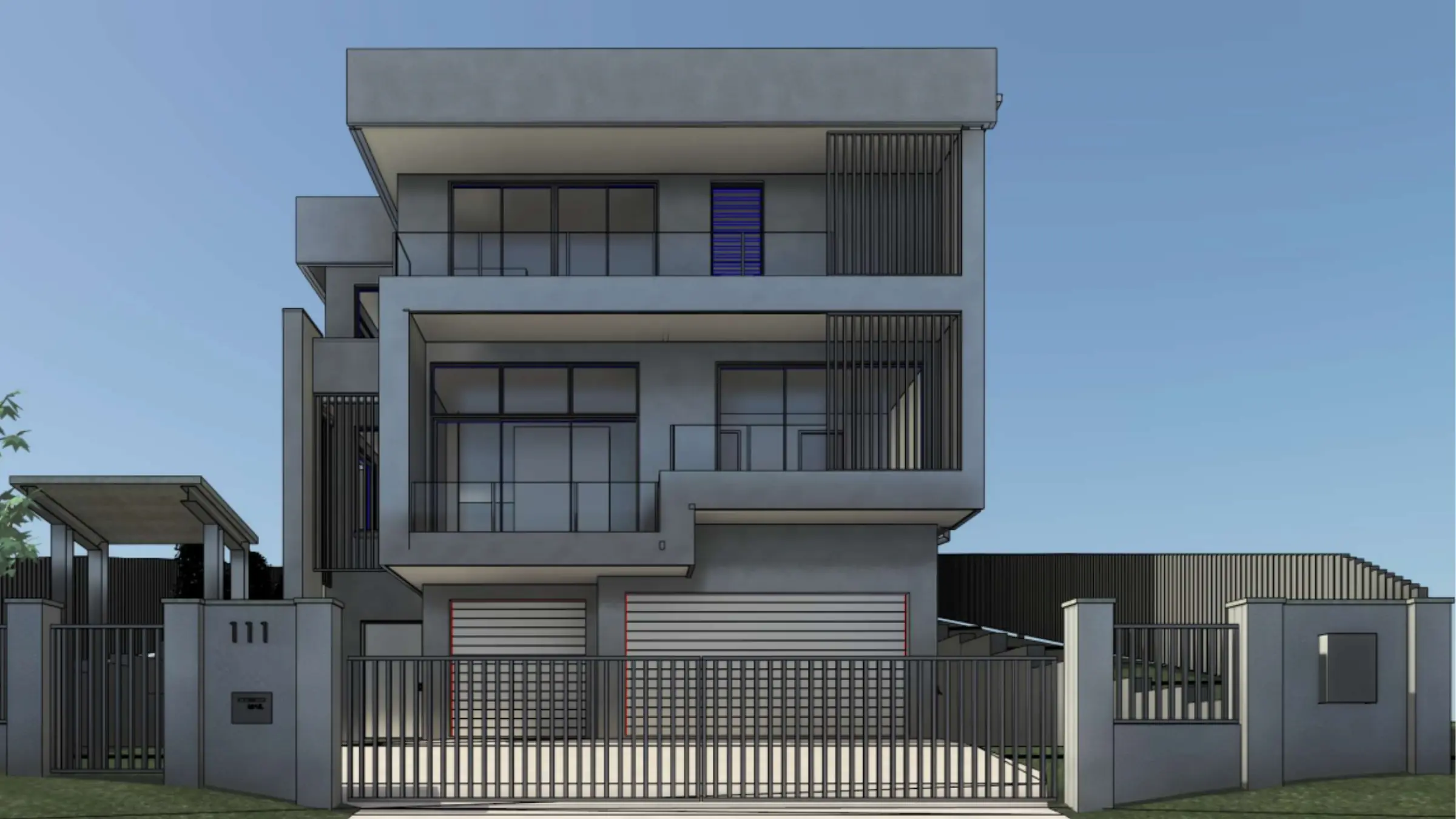
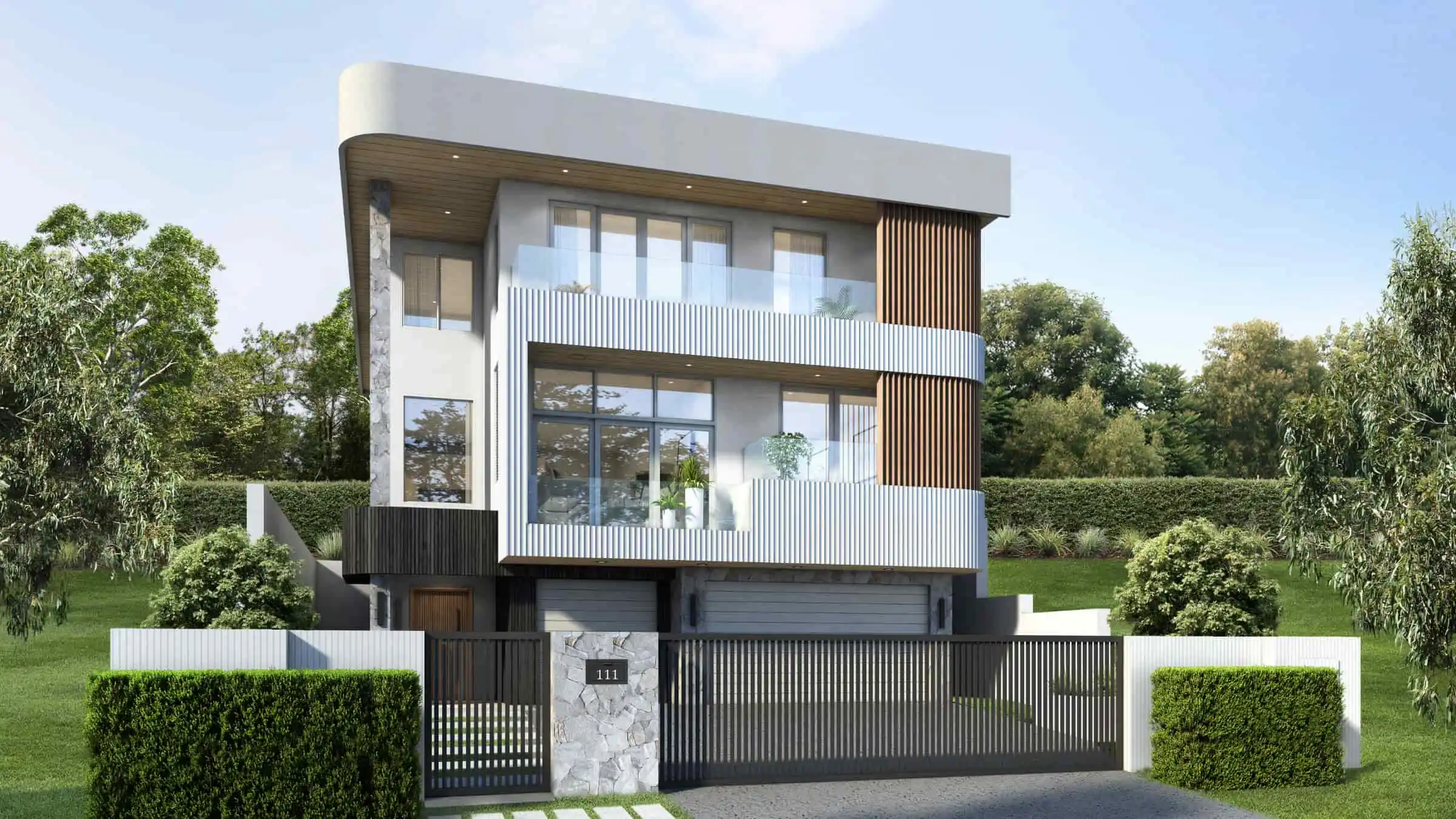
We make it look easy, but there’s a reason ‘Architect Designed’ Homes have a Professional Edge to them (See Above!).
At Hotspace, we are especially trained to turn your existing Facade into a Thoughtful and Striking Design that is specific to You, your Home’s Shape and Style, your Financial Investment, and your Location.
If you’ve tried and not yet succeeded in coming up with a suitable solution for yourself, perhaps it’s time to seek professional guidance. You can contact us here.
Join my Facebook Group ‘Home Renovators Network Australia’ (https://www.facebook.com/groups/HomeRenovatorsNetworkAustralia/) for feedback & ideas from other renovators as you update your own home’s façade.
Jane Eyles-Bennett is one of Australia’s top exterior designers and owner of design firm Hotspace Consultants. Join Jane in her Facebook group Home Renovators Network Australia for design and renovation inspiration and insider tips for your home improvement projects.
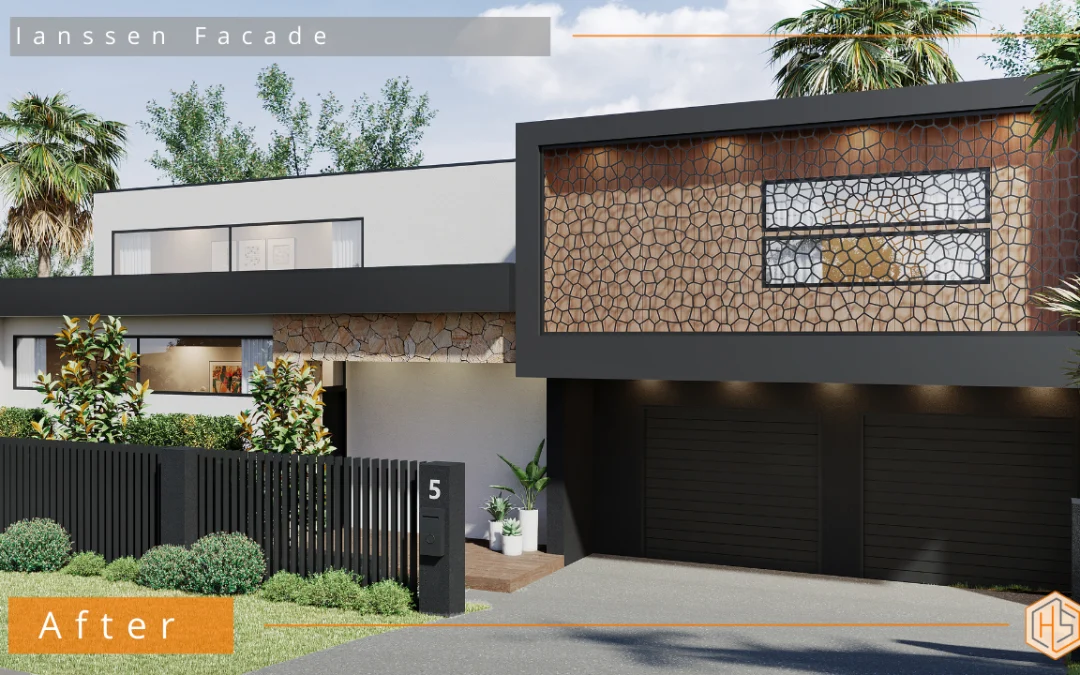
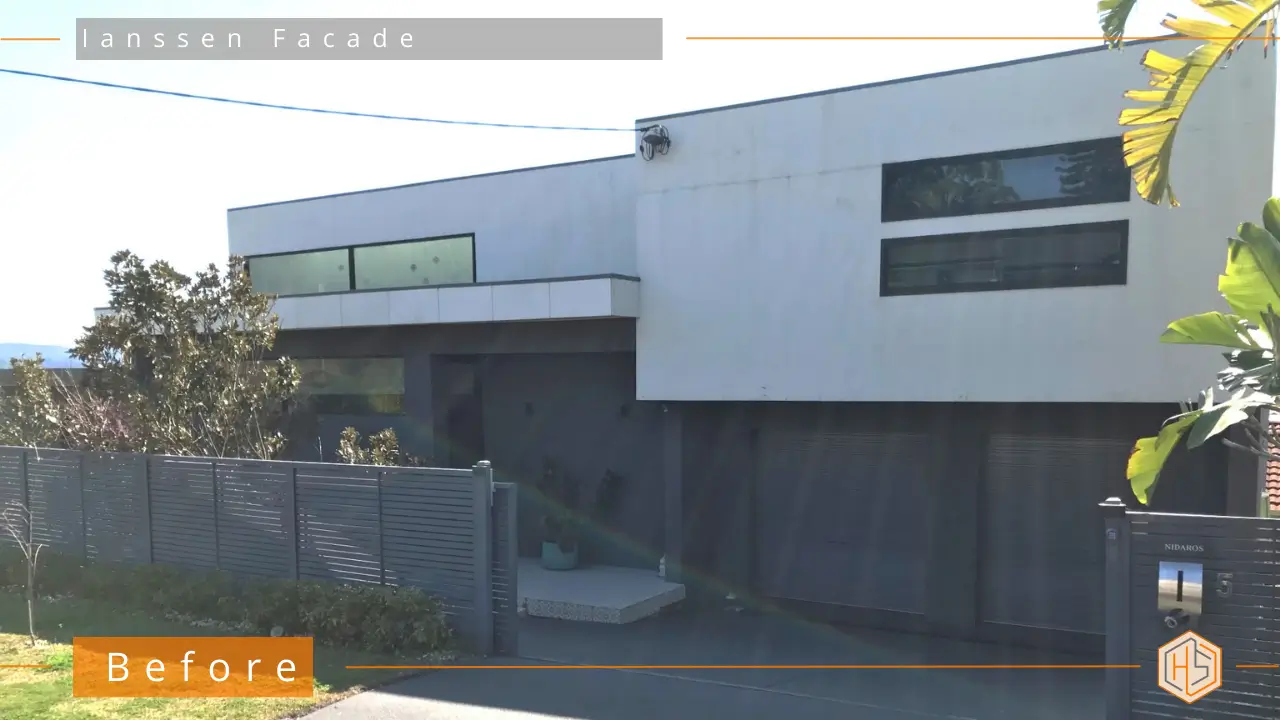
As a house façade renovation designer, many of the homes my company re-designs, were built as recently as 2000 – 2010. These houses look modern at first glance, but are lacking the finesse and interest of the contemporary ‘architecturally designed’ homes we’re seeing now in 2020.
They’re often built cheaply, clad with just one primary material (typically rendered) and usually with some sort of feature wall or material at the front entrance. Windows and doors are powder-coated and roof/guttering is often coated steel (think Colorbond etc). They look very ‘flat’ and uninspiring – even if the shape of the house itself is creative and modern.
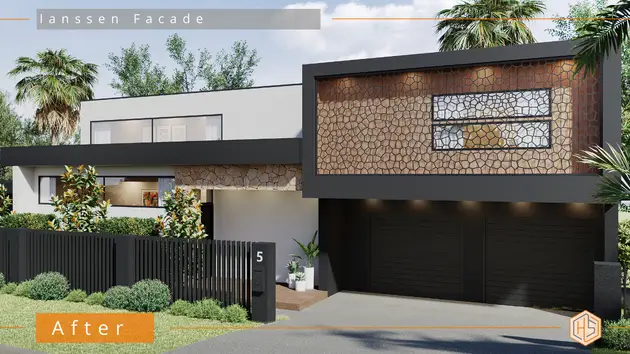
Compare this effect to the latest in contemporary home exteriors and you’ll see that the difference between the two often comes down to the number of materials, textures and colours that have been used in the designs.
An interesting looking, well designed façade doesn’t have to be multi-coloured, however, though it should have a variety of different materials and textures going on. My designs almost always incorporate a neutral colour scheme, a splash of contrast (dark vs light) and an accent of timber to introduce some warmth; and this is a good rule of thumb to follow for a contemporary, but not too-stark an effect.
You can usually take your 2000 -2010 facade from zero to hero without making too many drastic changes if you follow some important (but typically under-estimated) concepts.
Start by looking at what you have to work with and consider how you can incorporate elements that will play off these, to add depth and interest.
Some ways depth can be attained is by incorporating texture through cladding materials, landscaping, or creating or altering pathways. Although many houses have these near the entrance (and that’s a good place to start), you can also include these in other areas across your facade too.
The interest factor of your home’s façade will naturally improve once you add depth as described above. However, more punchy elements such as minor colour contrasts and the introduction of timber accents (for example) could be what elevates the look of your home from flat and uninteresting, to the talk of your street.
Colour is another important factor when modernising your façade and helps to achieve depth and interest. For longevity’s sake, keep your colour scheme neutral and work in with existing powder-coated materials (windows, doors, garage door, guttering, roof etc) where possible. Powder-coated areas can be painted but it is always my preference to work with what you have – particularly when these surfaces are still so new.
There are design ‘rules’ you can follow to incorporate less desirable trim colours of windows, guttering etc into the new look of your home’s exterior. For example, if you’re stuck with cream windows, then your main house colour should link to this somehow. That’s not to say your whole house needs to be painted cream, but the colour you do chose should have more of a warm base than, say, a cool base.
However you choose to add depth, interest and colour to your facade, ensure there is visual balance from left to right. This doesn’t mean that everything has to be symmetrical, but it does have to be balanced on each side. For example, if you have something eye-catching on one side, balance it with something else on the other side to counteract the effect. It could be that you use the same material but apply it differently, or it could be a colour that is repeated on the other side or at the entrance.
Lastly, when updating your façade, don’t forget to link your fence back to the house in some way. You might have a plain rendered fence that matches the house but is otherwise a bit boring, so look at ways you can add interest. You could replace the letterbox, add a timber slat feature, change the gate or do some landscaping.
For the best result, ensuring your existing and new exterior textures, colours, materials and shapes all work together to create a cohesive picture, is key.
Join my Facebook Group ‘Home Renovators Network Australia’ (https://www.facebook.com/groups/HomeRenovatorsNetworkAustralia/) for feedback & ideas from other renovators as you update your own home’s façade.
Jane Eyles-Bennett is one of Australia’s top exterior designers and owner of design firm Hotspace Consultants. Join Jane in her Facebook group Home Renovators Network Australia for design and renovation inspiration and insider tips for your home improvement projects.