
Rendering brick is one of the fastest ways to take a tired, dated home and give it real street presence. It’s also one of the easiest ways to end up with a result that looks like every second house on the street. The difference comes down to the decisions made before the render even goes on. If you want to see what’s possible, have a look through our gallery of rendered facade transformations.
Why rendering brick works
Drive through any established suburb and you’ll see brick homes everywhere. Some still hold their own, but most feel stuck in the decade they were built.
Rendering brick works because it does two things at once. It hides the often-dated brick colours that no amount of cleaning will fix. And it gives you a clean surface to actually design with, rather than working around what’s already there.
Done well, rendering brick gets you a smooth, shaper finish that unifies the whole facade and the freedom to choose a colour that actually suits your home.
But the render itself is only half the job. What you do with it after is where most homes are won or lost.
✨ Designed by The Facade Design Co ✨
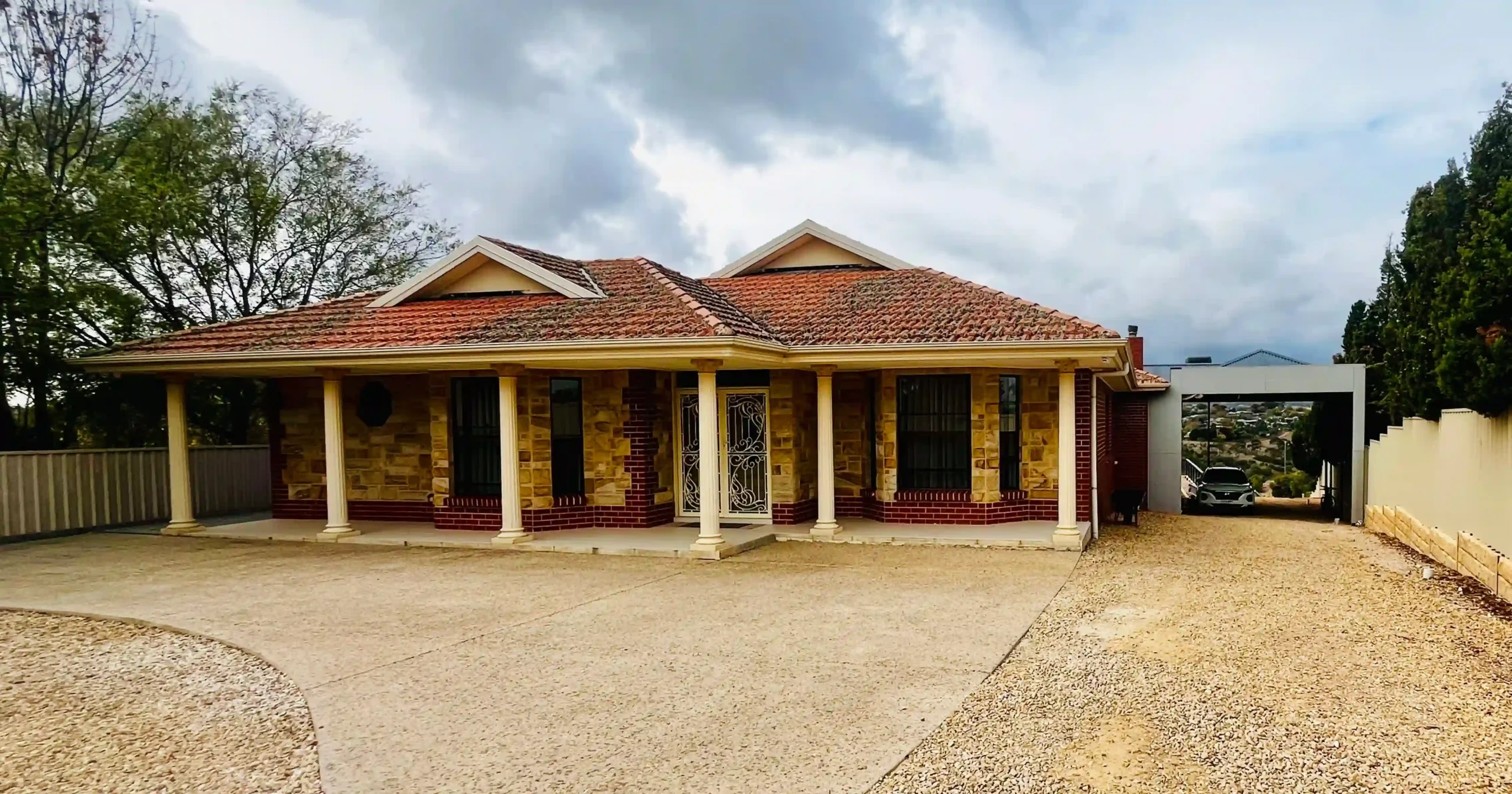
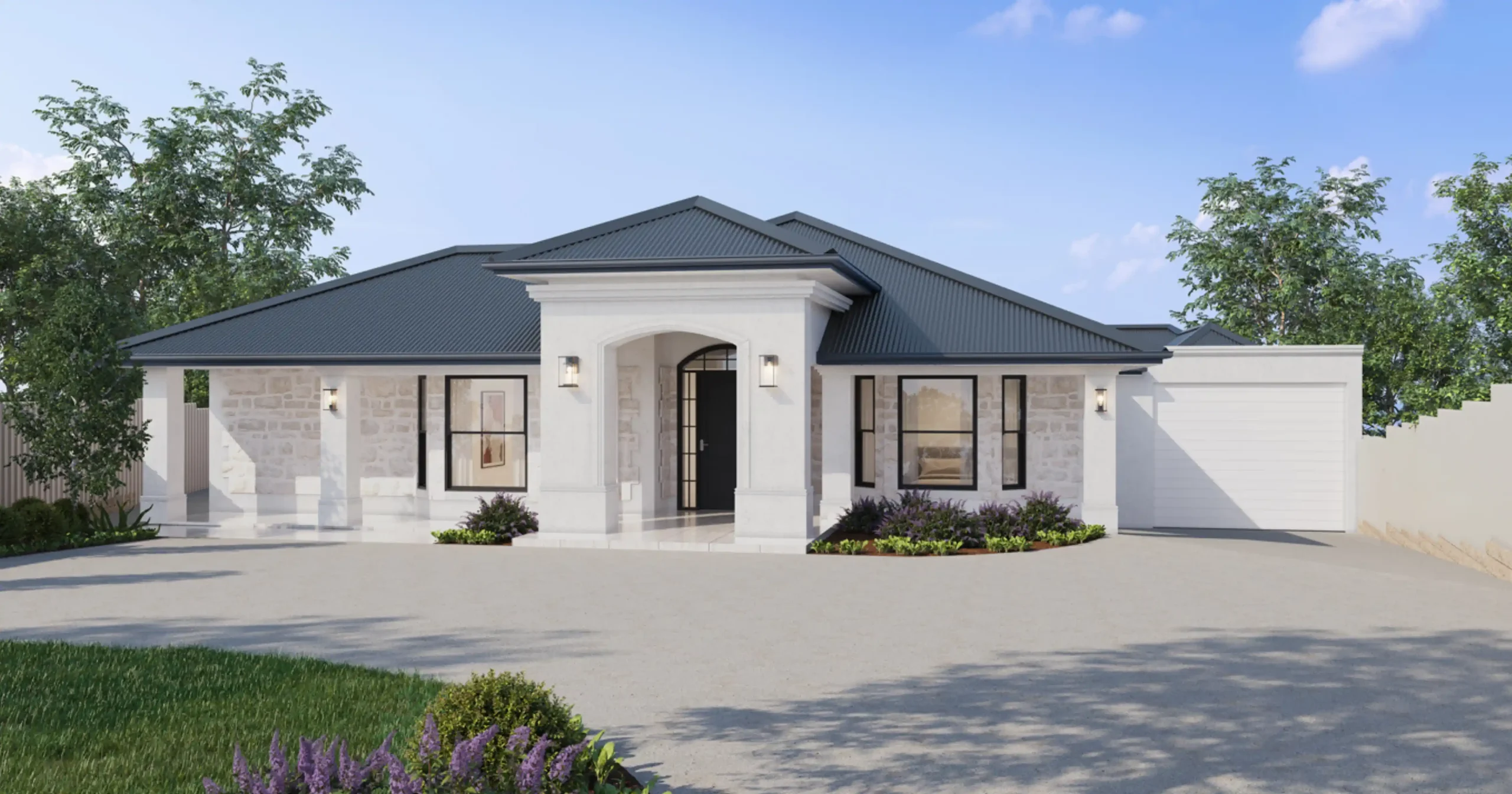
Getting the colour scheme right
Colour is where I see the most expensive mistakes happen. Homeowners fall for a bold or trendy shade, love it for two years, then spend money repainting when it starts to feel dated.
Neutral tones (whites, off-whites, warm greys) tend to be the safer, smarter choice, but they can come across as flat.
Texture is what stops it looking flat
The biggest hesitation I hear about rendering brick is that it’ll flatten the whole facade. Fair concern. Render on its own can look one-note if you don’t plan for depth.
The fix is layering texture and material against the render, not just painting over the brick and calling it done:
- Vertical timber battens or posts for warmth and rhythm
- Concrete-look cladding as a contrast panel
- A subtle texture change around windows or entry points
- Simple changes in render finish to create shadow lines
None of this needs to be dramatic. It just needs to be intentional. That’s the part that separates a home with genuine street appeal from one that just looks freshly painted.
What else pulls the look together
Rendering brick changes the base. What sits on top of it is what makes the home feel finished rather than half-renovated.
A few upgrades that consistently make a difference:
- A new front door with proper hardware, not an afterthought
- Windows that suit the new proportions, whether that’s slimline or oversized
- A garage door finished to match or intentionally contrast
- Roofing that doesn’t fight with the new facade colour
- Lighting that highlights architecture instead of just lighting a path
The part most people skip
Rendering brick is a big decision, and it’s permanent enough that getting it wrong is a genuinely costly mistake to fix. The homeowners who end up happiest with the result are the ones who plan the whole facade before a single tin of render is opened, not just the render colour in isolation.
That’s the part I help with. Not ideas or inspiration, you likely already have plenty of that. What you need is a plan that ties the render, the materials, the colours and the architectural details together into something that can actually be built, and that still looks right in ten years.
If you’re weighing up rendering brick and want to get it right the first time, book a preliminary enquiry (link below) and let’s talk through what your home actually needs.
Jane
📧 jane@hotspaceconsultants.com
🌐 https://hotspaceconsultants.com/preliminary-enquiry/