
I’m going to make a call that may not be popular. Of all the exterior design trends I’ve watched arrive over the past few years, there are three I believe will date homes much faster than people expect.
I’ve been designing façades for a long time – long enough to see plenty of ideas arrive with great enthusiasm and then quietly disappear. And the ones that age badly usually have something in common. They were chosen because they were everywhere at the time, rather than because they suited the house. So here are my three, along with what I’d lean towards if you’re building or renovating now.
But first…
Why some exterior design trends age faster than others
A trend isn’t a problem in itself. Every era has its look, and some of Australia’s most loved homes carry clear signs of when they were built.
The trouble starts when a feature is added as decoration instead of growing out of the architecture.
When a detail has a reason to be there, it tends to hold up. It might frame a view, shade a window or soften a hard corner. When it’s there because it photographs well this year, it becomes a date stamp.
That’s the lens I’ve used for all three of the trends below.
1. Decorative arches
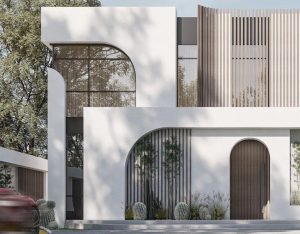
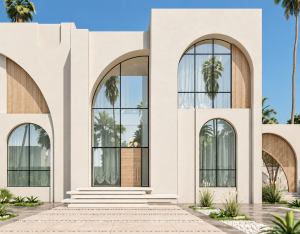
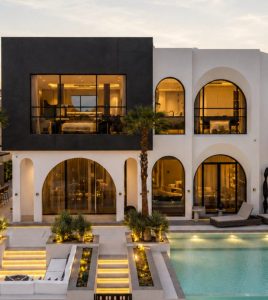
Arches are everywhere at the moment. Arched front doors, arched windows, arched openings cut into fence walls and porticos. I understand the appeal. After years of hard-edged boxes, a curve feels soft and welcoming.
But I think the decorative arch will become one of the clearest timestamps of the mid-2020s. In ten years, I suspect people will look at a row of arched windows on a new build and know almost exactly when it went up.
Curves versus arches
There’s a distinction worth making here. Soft architectural curves are a different thing altogether.
A rounded corner on a rendered wall, a gently curved balustrade or a sweep of front steps can feel calm and enduring, because the curve belongs to the form of the building.
The arches I’d be cautious about are the ones that sit on the surface. Arched recesses with nothing behind them. Arch-shaped timber panels. The same arch repeated across every opening on the façade. When one shape is used that many times, it stops being a feature and starts being a theme.
If you love the softness an arch brings, I’d usually suggest one considered moment, such as a single arched opening into a courtyard, rather than making it the language of the whole house.
2. Pale, whitewashed timber
I still love pale timber indoors. Light oak floors, limed joinery and soft blonde tones create a lovely, airy interior, and I don’t see that changing any time soon.
Outside is a different story.
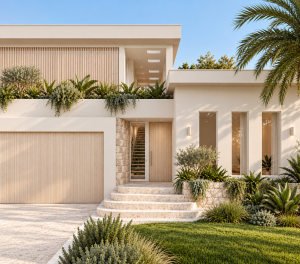
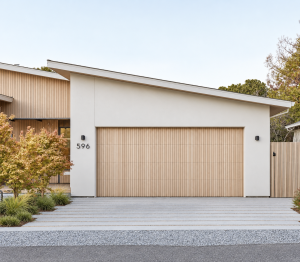
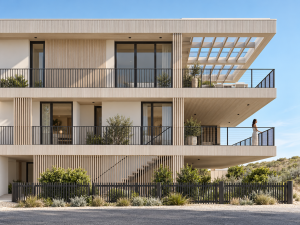
Pale, whitewashed timber has been used so heavily on façades here in Australia, that it’s starting to feel like the default. Pale battens at the front door, a blonde garage door, light timber-look screening wrapped around the upper level. Paired with white render, it all blends into one soft, washed-out palette.
There’s also the question of how it sits in our light. Australian sun is strong, and very pale timber against pale render can flatten a façade. There’s little to tell the eye where one material stops and the next begins, so the detailing gets lost from the street.
What I’d lean towards
I’d rather see richer timber tones used with stronger contrast. Warm mid-browns, the depth of spotted gum, or walnut-toned finishes.
A darker timber against light render, or a warm timber beside charcoal, gives a façade definition. It reads clearly from the kerb and it ages with far more grace.
Contrast doesn’t have to mean drama. It simply gives each material room to be seen.
3. Desert-style landscaping
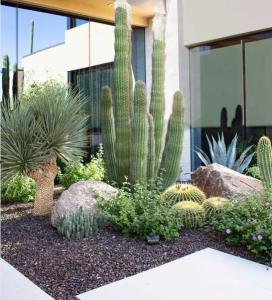
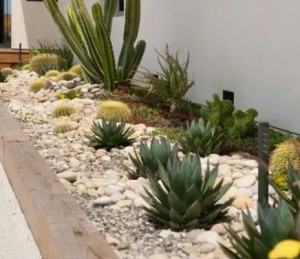
Desert-style front gardens, with large cacti, agaves, golden barrels and expanses of gravel or river stone, have become a popular answer to the question of how to make a front yard easy. It’s true that these gardens need very little water or attention. But they can look incredibly stark, particularly against a white or cream house. Rather than softening the architecture, they tend to sharpen it.
It reminds me of the yucca craze years ago, when spiky yuccas seemed to appear in every second front yard. They felt modern at the time. Before long, they were the first thing new owners wanted removed.
Layered planting lasts
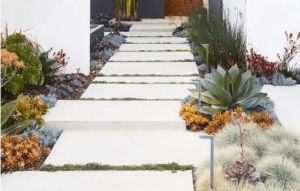
What I’d much rather see is layered planting. A mix of ornamental grasses, soft-leaved shrubs, groundcovers and a feature tree or two creates depth and movement. It changes with the seasons, it grounds the house, and it makes a home feel lived in.
You can still choose hardy, drought-tolerant plants. Many native grasses and silvery shrubs suit our climate beautifully and ask for very little. The difference is in the arrangement. Height, texture and softness matter far more than any single statement plant.
Landscaping is often the last thing considered on a build, yet it’s the frame for the entire façade. It deserves the same thought as the render colour or the front door.
What tends to stand the test of time
After three decades of looking closely at houses, I’ve noticed the façades that age well share a few qualities:
- proportions that feel balanced from the street
- a restrained palette of three to four materials, with clear contrast between them
- details that do a job, rather than simply decorate
- planting that softens the architecture instead of competing with it
None of these belong to a particular year, and that’s exactly why they work.
It’s also why I put so much care into a full façade design plan for my clients who are building new or renovating, before anything is built. When colours, materials, proportions and landscaping are worked through together on paper, it’s much easier to see whether a feature genuinely suits the house or is simply of the moment. That plan sits alongside the work of your architect and builder, so everyone has a clear picture of the finished exterior before construction begins.
Changing a drawing is easy. Changing a finished façade is not.
Before you commit to a look
Exterior design trends can be fun to borrow from. The trick is knowing where to use them. If you’re planning a new build or renovation and want to feel confident your home’s exterior will still look right long after these trends have passed, I’d love to help. You’re welcome to book a complimentary consultation, and we can talk through your home, what you love about it and what’s most likely to last.
Jane