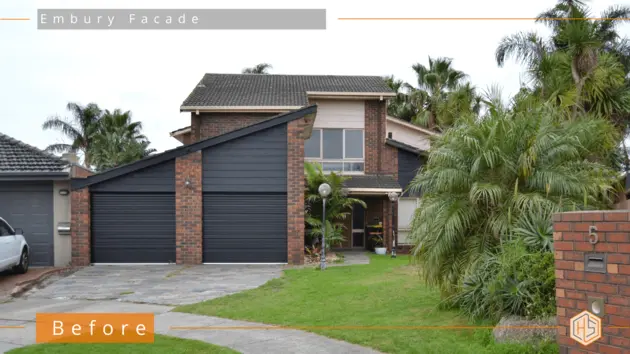
Summer’s still a way off, so now is the perfect time to start planning your outdoor living upgrade. Whether it’s a new pool, a patio extension, or simply rejuvenating a tired alfresco, here’s how to create an inviting, practical, and harmonious haven that you never want to leave!:
1. Create a Seamless Look – Blending the old with the new is often a delicate balancing act in home renovation. The goal is to create an outdoor space that feels both fresh and familiar; an extension of your indoor living area. Achieving this seamless integration can involve using similar materials or colours that tie into your home’s existing style (like the brick on the design below).
👇Designed by Hotspace👇
2. Creating Warmth and Invitation
Creating a warm and inviting outdoor living space is about more than just the physical elements. It’s about creating an atmosphere. The right colour scheme, lighting, and landscaping can all play a part. Consider warm or neutral colours to promote a sense of calm and tranquillity. Enhance the area’s ambience with strategic outdoor lighting, illuminating key features like a pool or an outdoor dining area. Plants can also contribute to a welcoming atmosphere. Choose greenery and flowers that harmonise with your outdoor setting, providing an attractive backdrop and perhaps even sweet fragrances.
3. Selecting Practical Materials and Colours – Your choice of materials and colours for the outdoor area is more than just an aesthetic decision. It significantly impacts the longevity, maintenance requirements, and overall usability of your space. Choose materials that are designed for outdoor use, durable, and easy to maintain. They may cost a little more but will last and look good for a lot longer.
4. Furniture and Accessories: Enhancing Usability
The right outdoor furniture and accessories can significantly enhance the usability of your space. Choose versatile, comfortable furniture that encourages relaxation and socialising. Consider including an outdoor dining set for alfresco meals, or a comfortable lounge set for leisurely outdoor gatherings.
5. Complying with Regulations – As dull as it may sound, ensuring all council permits are correctly applied for is crucial when making substantial changes to your outdoor space. Regulations can vary between localities, but typically, installing pools, extending buildings, and even adding certain types of decking or fencing may require a permit. Not complying can lead to fines or the need for costly modifications down the line. Engage a professional if you’re unsure about local regulations, as they will have the experience and knowledge to navigate this process smoothly.
Are you planning an extension or adding a pool and need guidance on what materials and details to use? To find out if we can help, contact me here or via the methods below.
Jane
jane@hotspaceconsultants.com
Ph 0411705556
https://hotspaceconsultants.com/preliminary-enquiry/
Exterior renovations don’t mean starting from scratch. You can achieve impressive kerb appeal without emptying your wallet.
I’m not talking about being a cheapskate either. Being smart with how you improve your home’s exterior – whether your budget is $60k or $160k – is key!
The secret lies in prioritising the changes (see proof below and in our gallery!).
Instead of undertaking a complete overhaul, focus on some key strategic updates in your exterior house renovation. If you do this well, you’ll remarkably transform your home, and save expense, time, and effort in the process. This approach is exactly what we at Hotspace can guide you through. The fee we charge will pay off multiple times over in the renovations you won’t need to make.
Here are a few targeted updates you could consider…
Clad Wisely: Instead of re-cladding the entire house, focus on a specific area that needs attention. This could be an exterior wall or two that face the street, making the most visual impact.
👇Designed by Hotspace👇
Pay Attention to Trims: A fresh coat of paint on your gutters, fascias, doors and window trims can make them pop, lending your home a refreshed look.
Tweak Fences and Gates: Instead of replacing, consider refurbishing your fences and gates. Adding a top trim, painting them, or replacing inserts can make them look as good as new.
Light it Up: Updating your exterior lighting fixtures can dramatically change the mood of your home. Add some themed wall lights either side of your garage door and front windows for an instant uplift.
Landscaping Updates: A complete landscape redesign may be costly and time-consuming. Instead, focus on key areas like garden beds, paths, or the lawn. Add some new plants or replace the mulch for a tidy and attractive look.
Spruce Up the Entrance: Your front entrance is the first thing visitors see. Make it stand out with a stylish door, or even some new posts or portico.
With Hotspace, you’re not just getting generic advice. You’ll receive tailored guidance based on your own home, your ‘dream style’ and of course, your budget. You can provide us with inspiration images of houses and colour schemes you like, and we’ll put together a plan that optimizes these ideas for your unique situation.
You’ll be surprised to discover that you don’t need to do as much as you think to achieve a stunning transformation. By focusing on key areas in your exterior house renovation and working with Hotspace, your home will look better than ever, and you won’t have to break the bank. With this targeted approach, your dream home is within reach!
To find out if we can help you, contact me here or via the methods below.
Jane
https://hotspaceconsultants.com/preliminary-enquiry/
It takes just 7 seconds to form a first impression, so the way you present your home exterior is key.
Even if selling isn’t on your immediate horizon, isn’t it worth that every time you pull into your driveway, you’re welcomed by a beautiful sight that makes you proud?
Here are five exterior facade ideas to enhance your home, turning it into a visually appealing, welcoming place:
1) Eye-Catching Colour Scheme
An engaging colour scheme can significantly elevate your home’s kerb appeal. It’s not just about picking attractive colours; it’s about choosing hues that complement your home’s architectural style and blend harmoniously with the surroundings. Consider a mix of neutral tones for large areas and more vivid colours for accents, such as the front door or trims. Thoughtful use of colour can highlight your home’s best features and mask less desirable ones.
👇Designed by Hotspace👇
2) Low-Maintenance Landscaping
A well-tended garden speaks volumes about the care taken in maintaining the home. It also adds to the aesthetic appeal, providing a welcoming feel. Consider integrating native, low-maintenance plants for a pleasing look with minimal effort. Plant pots near the entrance can lend a charming touch and make coming home a delight.
3) Exterior Lighting
Strategic exterior lighting can highlight the beauty of your home while ensuring safety and security. Use it to showcase architectural details, illuminate the entrance, or draw attention to your lovely landscaping. Warm, low-intensity lights can create a welcoming and cosy ambiance.
4) Clean and Well-Maintained
In addition to exterior facade ideas to update your home, keeping everything clean and well-maintained is essential. Peeling paint, dirty windows, clogged gutters, or a rusty mailbox can negatively impact the home’s overall appeal. Ensure minor repairs and cleaning tasks are tackled promptly. Pressure wash the walls, clean the windows, touch up paint as needed, and make sure the roof is in good condition.
5) Capture the Beauty
If you’re intending to sell, a stunning ‘hero photo’ of your home’s facade and front yard can significantly influence potential buyers’ first impressions when browsing online listings.
Creating a positive first impression of your home isn’t just for potential buyers; it’s for you, too!
If these exterior facade ideas have inspired you to update the outside of your home, contact me here or via the methods below.
Jane
jane@hotspaceconsultants.com
Ph 0411705556
https://hotspaceconsultants.com/preliminary-enquiry/
Building a carport may sound like a fairly simple task, but creating one that seamlessly blends with your home exterior design can be a challenge.
The last thing you want is for it to stick out like a sore thumb. Here are a few key considerations to help you incorporate a carport into your home without compromising its aesthetics or functionality.
Harmonise your Colours and Materials:
The first step to avoiding a “Pimple on a Pumpkin” is to ensure the colours and materials are in harmony with your house. Use similar or complementary colours and materials to create a natural extension of your home exterior design. For instance, if your house has cladding, consider incorporating some cladding into the carport design. If your home is painted a specific colour, coordinate your carport to match or subtly contrast, lending cohesion to the overall aesthetic.
👇Designed by Hotspace👇
Complementary Rooflines:
The roofline of your new carport should be one of your key architectural considerations. A roofline that is drastically different from your home can be visually jarring and disrupt the flow of your overall design. Try to match your carport’s roof pitch to your home’s existing roofline, or opt for a design that complements it. This could be a flat roof for a modern home or a gabled or sloped roof for a more traditional or classic look. The success of your home exterior design relies on this!
Compliance is Key:
Building a carport is not a decision you can make without taking into account local building regulations. Ensuring that your carport design and location is compliant with the local codes and standards is crucial to avoid any legal implications and costly adjustments down the line. This includes aspects like the carport’s height, size, sides and potential impact on neighbours or public utilities.
Mind the Setback:
Each council will have its own rules regarding how far structures like carports need to be ‘set back’ from the road or the property line. Before building, check with your local zoning laws to determine the requirements for your area. Failure to adhere to these could result in penalties, or worse, having to tear down and rebuild your carport.
Budget Conscious:
It’s easy to get carried away with grand visions of the perfect carport, but it’s essential to keep your budget in mind throughout the process. Detailed planning before construction begins can help avoid any unexpected costs. Be clear on what materials you plan to use, who will perform the work, and any permits you’ll need. A well-researched and realistic budget will keep your carport project on track and prevent it from becoming a financial burden.
Ultimately, the aim is to build a carport that’s an aesthetic asset to your property as well as a practical one. By considering the above, you’ll be on track to add a carport to your house that doesn’t look like a Pimple on a Pumpkin and a value-adding addition at that!
Need help adding a carport or other addition to your home? Contact me here or via the methods below.
Jane
jane@hotspaceconsultants.com
Ph 0411705556
https://hotspaceconsultants.com/preliminary-enquiry/
If you want to modernise the exterior of your brick home, you might think the only answer is to render. In fact this is the go-to for most brick home owners – simply because they don’t know any other way.
The good news is that there are other methods available. If retaining your brick is important to you (eg you like the bricks, you prefer the lack of maintenance, or you simply don’t have the inclination or budget to cover them up), here are some exterior renovation ideas for enhancing your home while maintaining its intrinsic beauty.
1. Introduce New Colours and Materials
One strategy to take some of the visual emphasis off the bricks is to introduce new colours and materials to certain features of your home. This could be on posts, entrance, carport, or any other area that seems fitting. Consider using cladding or small amounts of render in these sections. Cladding could introduce a different texture and colour to the facade, whereas rendering a small area can blend smoothly with the existing brick.
👇Designed by Hotspace👇
2. Embrace Soft Landscaping
Soft landscaping offers an excellent way to tone down a brick facade. The brick, being a hard and potentially harsh-looking material, can be beautifully balanced by the softer, more natural appearance of plants. Incorporating plenty of greenery helps to blend the structure with its surroundings and creates a pleasant, welcoming aesthetic. Consider planter boxes around the house’s perimeter or use climbing plants to add a touch of natural charm.
3. Paint Trims in Neutral Contrasting Colours
You no doubt have plenty of exterior renovation ideas for your brick home, but painting your trims in a neutral contrasting colour should be at the top of your list! Whether you opt for a dark charcoal for a contemporary look, or a crisp white for a more traditional feel, it’s crucial that your choice complements the brick’s colour. Take the time to examine different paint swatches alongside your bricks to ensure you select a shade that harmonises with the existing materials.
4. Install Wall Lights
Wall lights can be another fantastic way to improve your brick facade. Not only will they add sparkle to your home during the evening, but they’ll also give pops of interest to your brick exterior during the day. Typically, the colour of the wall lights should match the trims to create a consistent and cohesive design.
5. Enhance Pathways
Don’t overlook the impact of pathways on your home’s exterior appearance. Instead of a solid, continuous surface that could add to the hard aesthetic, consider using individual pavers. They help to break up the path, making it visually more appealing and harmonious with the brickwork. Pavers come in a variety of shapes, sizes, and materials, allowing you to find the perfect match for your home’s style.
6. Coordinate Fence Styles
Your home’s exterior design should ideally extend to your fence, as this helps to create a unified look. When choosing a fence design, make sure it aligns with the style of your home and complements the accent details. If you’ve introduced cladding or slats, for instance, a similar element on your fence could work well. Alternatively, a fence painted in the same colour as your trims can further link the various aspects of your home’s exterior.
Need help condensing your exterior renovation ideas to enhance your brick facade without rendering? Contact me here or via the methods below.
jane@hotspaceconsultants.com
Ph 0411705556
https://hotspaceconsultants.com/preliminary-enquiry/
Revamping a pool area can feel like a daunting task, yet with the right planning, execution, and creative insights, it can also be an exhilarating adventure. A beautifully designed pool area can add a touch of luxury to your home and serve as a refreshing retreat where you can entertain, relax, or enjoy a well-deserved break. Here are a few ways to jazz up your pool area, making it a stylish and comfortable outdoor living space.
1. Pave The Way – Choosing the right pavers for your pool area is crucial. The colour of your pavers can affect not just the look, but also the feel of your pool area. Avoid too bright colours as they can cause glare under the sun, and too dark colours can get too hot to walk on barefoot. Opt for a middle ground – neutral-toned pavers can add a sophisticated look without the disadvantages of extreme shades.
2. Choose Your Pool Fencing Wisely – Safety should be your top priority when designing a pool area. Pool fencing is essential, but it doesn’t have to be bland. If your budget allows, consider installing a frameless glass fence, which adds a touch of class and provides unobstructed views of your pool. If glass fencing is out of your budget range, consider opting for black fencing. Not only does it add a modern aesthetic, but it also blends in with the natural surroundings better than traditional white fencing.
👇Designed by Hotspace👇
3. Embrace Planter Boxes and landscaping – Planter boxes and landscaping in general can help add a touch of nature and a colour palette to the space. Opt for robust, low-maintenance plants that can withstand the poolside conditions like sun, shade, and occasional water splashes. You can consider plants like agave, succulents, or ornamental grasses that can add texture and interest to your pool area.
4. The Art of Coping – The coping around your pool – the edge where the pool shell meets the deck – can drastically affect the overall look. For a softer, more natural look, consider curved coping, which mimics the soft lines found in nature. If you prefer a more contemporary design, squared coping adds a sleek, modern edge to your pool.
5. Classy Pool Lighting – Pool lighting plays an essential role in creating the right ambiance and ensuring safety during night-time swimming. Instead of multi-colored lights, consider using elegant, understated lighting. White LED lights or subtle underwater illumination can cast a magical glow on your pool, transforming it into a nighttime oasis.
6. Create an Entertaining Area – To make the most out of your pool area, incorporate an entertainment space. The key here is to keep it conveniently located near your home’s lounge or kitchen. This way, you won’t have to travel far to get refreshments or entertain guests. A poolside dining area with comfortable seating and a BBQ station can create a convivial atmosphere for family gatherings or parties.
7. Strategic Placement of Sun Loungers – While proximity to the house is essential for an entertainment area, sun loungers can be placed a little further away. This creates a ‘destination area’ in your backyard, an ideal spot for relaxation and sunbathing. A strategically placed umbrella can provide shade when the sun gets too hot.
8. Festoon Lights for a Touch of Sparkle – Nothing says enchantment like a string of festoon lights delicately draped over your entertaining area. They add warmth, sparkle, and an invitation to linger after the sun has set. Whether strung between trees or along the fence line, these lights can elevate your pool area to new heights of elegance, creating a mesmerizing atmosphere that feels like a year-round celebration.
9. Compliance is Key – Lastly, but most importantly, ensure that your pool area is compliant with local regulations and codes. These rules differ from state to state significantly (eg in Qld a spa pool must be within a fenced area, while in Victoria, you can simply have a locked lid). Regulations cover aspects such as pool fencing, pool depth, safety signage, and emergency equipment. It’s essential to research your local regulations before starting any renovation or construction.
Feeling inspired? Get in touch here for help with jazzing up your outdoor living areas!
Jane
jane@hotspaceconsultants.com
Ph 0411705556
https://hotspaceconsultants.com/preliminary-enquiry/