
This beachside home in Curl Curl, NSW was one of those houses that wore their decade like a name badge, but its 90s house facade makeover is a good example of how much can change without touching the roofline. Three storeys of orange face brick, ornate metal balustrades and pale cream window frames.
It’s something I see a lot of. Many dated homes don’t need major structural work. They need someone to pinpoint the details tying them to their era, then replace those details with choices that will still feel right in twenty years.
✨ Designed by The Facade Design Co ✨
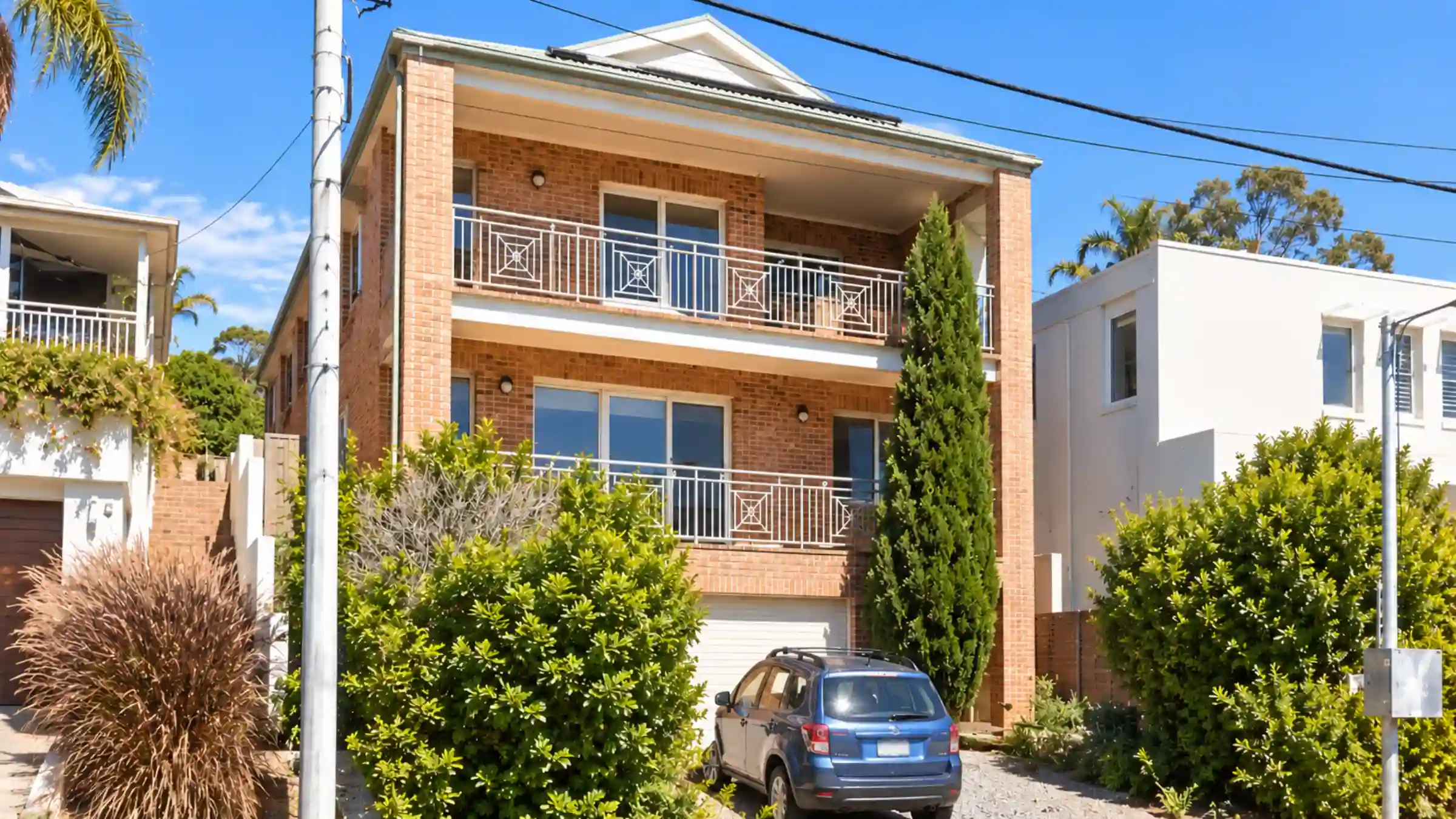
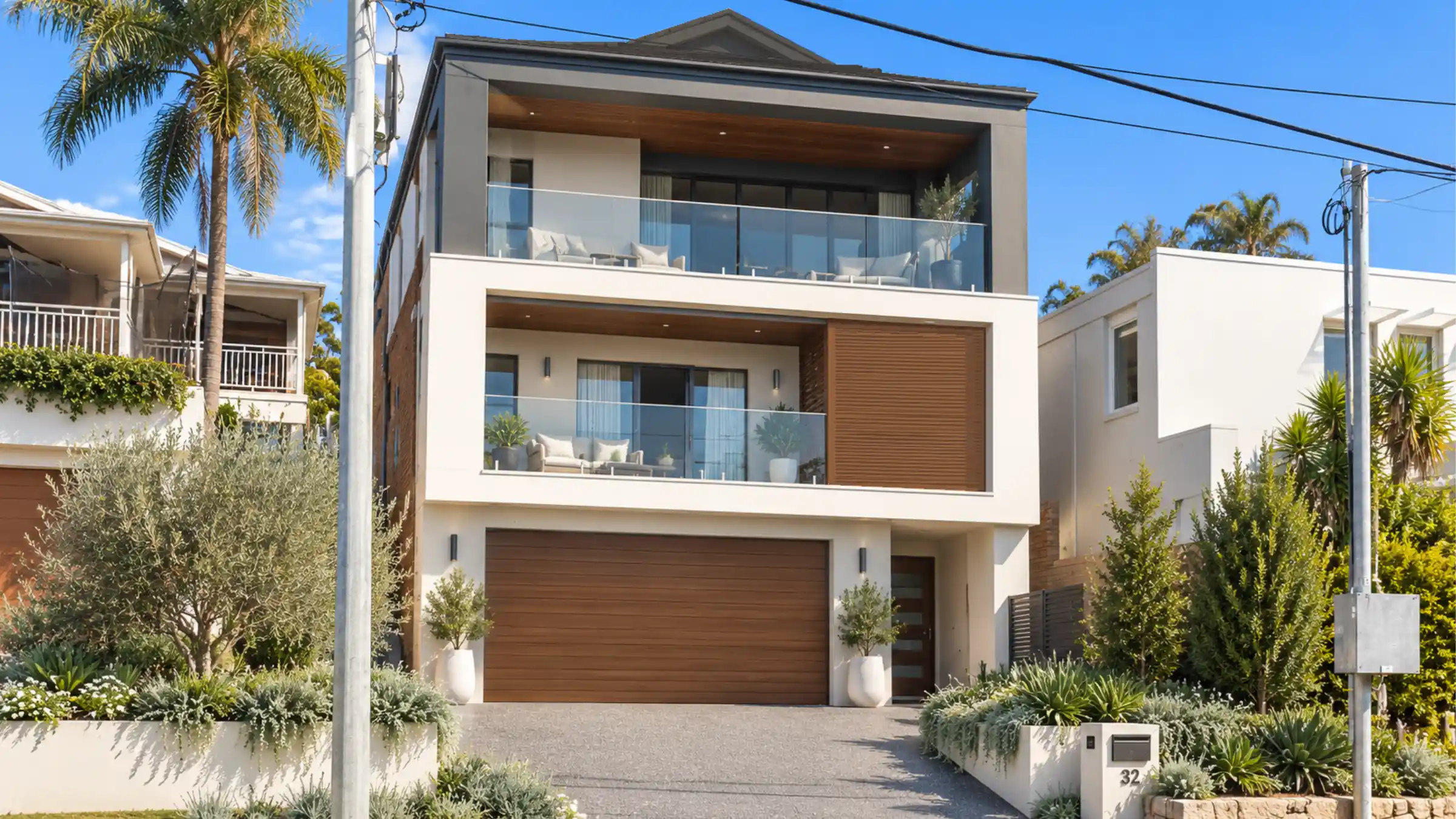
Inside This 90s House Facade Makeover
The owners wanted a modern look, and they wanted to add an ensuite by enclosing part of the lower balcony. The roofline and structure would stay as they were, with the new room built within the existing footprint.
My biggest challenge was the height of the building. With brick running from the garage to the eaves, the house read as one tall wall. I broke it into three clear layers, with a charcoal frame around the top level and soft white render wrapping the floors below. That single move gave the house proportion and depth.
The ensuite needed careful thought too. Bathroom windows facing the street are never ideal, so I placed a timber-look battened screen across the enclosed section which gives the owners privacy and filters the light, and from the street it reads as a design feature rather than an addition.
Because the owners were working within an existing structure, everything was resolved in a detailed Facade Design Plan before work began. They and their builder knew exactly what was being built, which takes a great deal of stress out of a renovation.
The result feels calm, settled and right for its coastal setting. For me, that’s what a good 90s house facade makeover should do. You’ll find more before and after projects in my portfolio.
Signs Your Facade Is Stuck in the 90s (and What to Do Instead)
Most homes from this decade share a handful of tell-tale details. Here are the ones I see most often, and what I’d do about each.
Pale aluminium windows with colonial bars
Cream frames tend to look chalky now, and lots of little glazing bars make windows feel busy. If you’re replacing windows, choose a darker frame in black, charcoal or white with uninterrupted glass. If they’re staying, check whether the bars are clip-in and can be removed and/or have them sprayed in a modern colour.
Face brick from top to bottom
Red, orange, salmon or mottled brown brick, often with contrasting mortar that highlights every joint. Render will give brick a fresh start. You don’t always need to cover every wall with render, though. Add in cladding, timber look battens or feature stone for extra interest.
Orange terracotta or brown concrete roof tiles
The roof is often the largest surface you see from the street. Tiles can usually be restored and recoated in a deeper neutral, and if replacement is due, Colorbond in a considered colour opens up a more contemporary look.
Federation revival details
Decorative gables, finials, turned posts, fretwork and bullnose verandahs in heritage green, cream or burgundy. I mean revival details on newer homes here, not genuine Federation houses, which deserve to be restored. Remove the ornamental add-ons, swap turned posts for square ones and replace curved verandah roofs with a simple skillion or flat awning.
Heritage trim colours
Deep green, burgundy, cream, dusty blue and heritage red outlining every edge. A tonal palette works far better today, with trims that match the walls or quietly recede. Let materials carry the interest instead. I’ve written more about choosing exterior colours if you’d like a starting point.
Stained timber doors with leadlight
Moulded panels and leadlight date a home almost instantly. A simpler door makes a much stronger statement, whether that’s flush timber, vertical grooves, slim glass strips or a solid colour. If there’s room, go wider or taller.
Lattice, roller doors and coach lights
Three small details that add up quickly. Replace lattice with horizontal or vertical battens, swap roller garage doors for a sectional door in a timber look or the wall colour, and trade lantern-style coach lights for slim wall lights and soffit downlights.
Patterned concrete, paling fences and curved garden beds
The garden and boundary matter as much as the house. Exposed aggregate or honed concrete suits a modern home far better than stencilled patterns. Treat the fence as part of the facade, and replace curved, brick-edged beds of palms and yuccas with straight rendered planters and fewer plant varieties repeated in groups. It’s all part of the whole street view.
Before You Change Anything
A dated facade is rarely one big problem. It’s usually a collection of small details pointing back to the same decade. The homeowners who get the best results:
- look at the whole house before changing any one element
- remove era-specific details before adding new ones
- repeat a few materials rather than introducing many
- plan everything before the first trade arrives
That last point matters most. Decisions made on site, one at a time, rarely add up to a cohesive result.
If Your Home Feels Stuck in Another Decade
If a few of these signs sound familiar and you’re not sure where to begin, I’d love to help. You can book a complimentary consultation with me here at The Façade Design Co. (formerly Hotspace Consultants – currently rebranding so forgive some inconsistencies as we roll out the new look!), and together we’ll work out which changes will make the biggest difference to your home before you commit to anything.
Jane