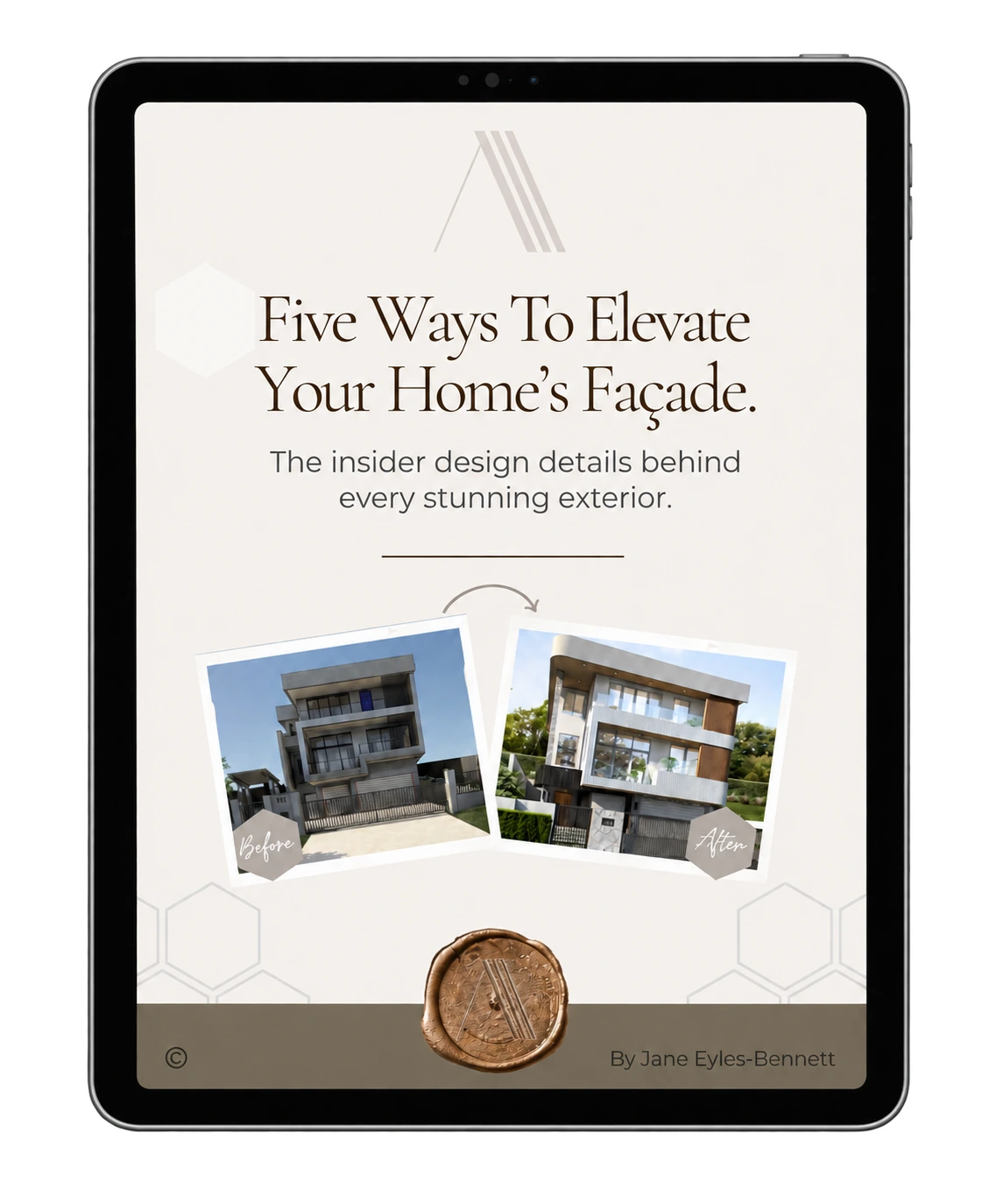
Straight answers to the questions Australian homeowners ask most about updating, renovating and redesigning the outside of their home.
Modernising Your Home
How can I modernise the exterior of my house?
Modernising a home’s exterior is about much more than choosing a new paint colour. Start by looking at the overall shape and proportions of the facade and identifying what is making the home feel dated. This might be the roofline, entry, garage, windows, balustrades, decorative details, materials or a combination of these.
Some homes can be dramatically updated with relatively simple cosmetic changes, while others benefit from introducing new architectural elements, cladding, screening, a stronger entrance or changes to landscaping.
The key is to consider the facade as a whole. Colours, materials, shapes and architectural details should work together rather than being selected individually. A successful exterior renovation should make the house feel cohesive and contemporary while still working with the existing architecture.
How do I modernise a dated brick house?
Before painting or rendering the brick, consider whether the brick itself is actually the problem. Often it is the combination of dated colours, roof, windows, garage door, entry and landscaping that makes an older brick home feel tired.
Depending on the house, existing brick can be retained and combined with contemporary colours, cladding, render, timber-look finishes or other materials. Alternatively, some or all of the brick may be painted or rendered as part of a broader facade transformation.
The most effective approach depends on the style and proportions of the existing home. Rather than automatically covering every brick surface, look at where changing materials will have the greatest visual impact. Keeping some existing brick can also reduce renovation costs while giving the finished facade more depth and character.
Can I completely change the look of my house without major structural renovations?
Absolutely. Some of the most dramatic facade transformations can be achieved without substantially changing the footprint or structure of the house.
New colours and materials can make a significant difference, but you can also introduce relatively simple architectural elements such as cladding, battens, screens, awnings, feature surrounds, planter boxes, a redesigned entrance or changes to balustrades and garage doors.
The important distinction is between simply redecorating the existing facade and redesigning it. If you only change the paint colours, you’ll essentially have the same house in a different colour. If you reconsider the shapes, materials, focal points and architectural details, it is often possible to give the home an entirely different character without undertaking a major rebuild.
What makes a house exterior look dated?
There is rarely one single feature that makes a house look dated. It is usually a combination of architectural details, colours and materials associated with the era in which the home was built.
Common examples include certain brick colours, ornate balustrades, small or poorly defined entrances, dated render colours, decorative columns, older garage doors, elaborate mouldings and colour schemes that no longer complement the architecture.
However, removing every original feature isn’t necessarily the answer. Some older elements can become an asset when they are incorporated thoughtfully into a new design.
A good exterior renovation identifies which elements are dating the house and which are worth keeping. This allows the renovation budget to be concentrated on the changes that will make the greatest difference.
How can I make a plain or boring house exterior more interesting?
A plain facade often needs more than colour – it needs layers, contrast and a clear focal point.
This can be achieved by introducing different materials, creating depth around windows or the entrance, adding architectural screening or battens, defining the front door, changing the garage treatment, adding awnings or incorporating landscaping into the facade design.
You don’t necessarily need lots of different features. In fact, adding too many can make a home look busy. Usually, a small number of well-considered architectural changes will have a much greater impact.
The aim is to create a hierarchy: decide where you want the eye to go first, then use shape, material, colour and landscaping to support it. For many homes, making the entrance more prominent while visually reducing the dominance of the garage can completely change how the house is perceived from the street.
Brick, Render & Cladding
Should I render my brick house?
Rendering can completely change the appearance of a brick home, but it isn’t automatically the best solution for every house. Before covering the brick, consider whether it is actually the brick that is making the facade feel dated, or whether other elements such as the roof, windows, garage, entry and colour scheme are contributing.
Sometimes retaining sections of existing brick and combining them with render, cladding or contemporary colours creates a more interesting result – and can reduce renovation costs.
If you do choose to render, think about the entire facade first. Simply changing a dated brick house into a rendered house won’t necessarily make it feel contemporary. The best transformations consider materials, colours, proportions and architectural details together, with render used as one part of the overall design rather than as the design itself.
Is it better to paint or render a brick house?
Painting and rendering can both modernise brick, but they create very different results.
Painting retains the texture and character of the existing brickwork and is generally a simpler way to dramatically change its colour. Rendering creates a smooth surface and can make the architecture feel quite different, particularly when combined with contemporary cladding or other finishes.
There are also practical considerations. Once brick has been painted or rendered, returning it to its original appearance can be difficult, so it is worth being confident about the decision before proceeding.
Rather than choosing between paint and render in isolation, consider what you’re trying to achieve with the whole house. Sometimes painted brick is exactly right. Sometimes render works beautifully. And sometimes the best design is to retain the original brick and update everything around it.
Can you put cladding over an existing brick house?
Yes, in many situations cladding can be installed over an existing brick exterior, making it a useful option when transforming a dated home.
Cladding can introduce a completely different architectural character without necessarily requiring the existing brickwork to be removed. Depending on the design, it might be used across large sections of the house or strategically on selected areas to create contrast, emphasise an architectural feature or visually change the proportions of the facade.
There are many cladding styles available in Australia, including weatherboard profiles, vertical boards, panels and timber-look products.
However, the appropriate installation method will depend on the existing construction, chosen product and relevant building requirements. A builder or suitably qualified professional should confirm the technical installation requirements before construction.
How do I choose the right exterior cladding for my house?
Start with the architecture rather than the cladding product.
The right cladding should complement the proportions and style of the existing house and contribute to the overall design you’re trying to achieve. Consider the profile, direction, texture and scale of the cladding as well as its colour.
For example, vertical cladding can emphasise height, while horizontal weatherboard-style profiles create a very different architectural character. Large-format panels can produce a cleaner, more contemporary appearance.
Practical considerations are also important, including exposure to weather, maintenance, durability, bushfire requirements where applicable and the suitability of the product for your home’s construction.
Most importantly, avoid selecting cladding simply because you like a photograph of it. A material that looks beautiful on one house isn’t necessarily right for another. Cladding works best when it has a clear purpose within the overall facade design.
What can I do with dated brick if I don't want to paint or render it?
You don’t necessarily need to cover brick to modernise a brick home. In fact, retaining the original brick can sometimes create a much richer and more interesting exterior.
The key is to change what surrounds it.
A dated brick can look completely different when paired with a contemporary roof and gutter colour, updated windows or trims, new garage door, modern front entrance, carefully selected cladding, architectural screening and contemporary landscaping.
You can also reduce the visual dominance of the brick by introducing another material to selected parts of the facade rather than covering the entire house.
Before deciding that the brick has to go, consider whether it could become part of the new material palette. Working with an existing finish rather than against it can save money and give the renovated home more character.
Exterior Colours & Materials
How do I choose an exterior colour scheme for my house?
Start with the elements of the house that aren’t changing. Your roof, existing brick, stone, window frames, driveway and other permanent finishes all influence which colours will work successfully.
From there, consider the architectural style of the home, its surroundings and whether you want the finished exterior to feel contemporary, coastal, classic, warm or more dramatic.
A successful exterior scheme usually includes a carefully considered combination of main colours, secondary finishes and accents rather than choosing each colour separately.
It is also important to view colours outside. Natural light can make colours appear significantly lighter and different from how they look on a small sample indoors.
Most importantly, colour should support the architecture. The right colour placement can highlight beautiful features, disguise less attractive ones and help different parts of the facade feel connected.
What are the best exterior colours for a modern house?
There isn’t one colour palette that makes a house modern. Contemporary Australian homes can work beautifully in warm whites, soft greys, earthy neutrals, deeper charcoals and even darker colours.
What makes the exterior feel contemporary is often how those colours are combined with the architecture and materials, rather than the individual paint colours themselves.
Warm neutrals paired with natural stone or timber-look finishes can create a softer contemporary look, while charcoal, off-white and darker accents can produce something more architectural and dramatic.
Be cautious about choosing colours purely because they are currently popular. Exterior finishes are expensive to change, so ideally your palette should complement the architecture and still feel appropriate long after today’s colour trends have moved on.
How many colours should I use on the exterior of my house?
There is no fixed rule, but most successful exterior schemes use a relatively restrained palette.
Rather than counting paint colours alone, think about all the colours and materials visible on the facade. Brick, stone, timber, cladding, roofing, window frames and landscaping are already contributing to the overall palette.
Using too many unrelated colours can make a facade feel busy, particularly if the house already has several different materials or architectural features.
A well-designed scheme might have one dominant colour, a secondary colour or material and one or two carefully placed accents. The aim is not necessarily to make everything match. It is to create enough repetition and connection that the exterior feels intentional and cohesive.
Should my roof, gutters and fascia all be the same colour?
Not necessarily. Whether your roof, gutters and fascia should match depends on the architecture of the house and what you want to emphasise or visually minimise.
Matching the gutters to the roof can help the roofline feel more streamlined, while choosing a fascia colour that relates to the walls or trims can create a different effect.
On some homes, contrasting roof and trim colours can highlight the architecture beautifully. On others, too much contrast draws attention to gutters, fascias and downpipes that would be better allowed to visually recede.
Rather than following a standard formula, consider where you want the eye to go. Functional elements don’t always need to become design features. Colour can be used strategically to make some elements stand out and others almost disappear.
How do I choose exterior materials that won't date?
Start by separating architectural character from short-term trends.
Natural-looking materials, restrained colour palettes and finishes that complement the architecture generally have greater longevity than highly decorative materials chosen simply because they are fashionable at the time.
That doesn’t mean a contemporary exterior needs to be conservative. You can introduce personality through cladding profiles, stone, brick, timber-look finishes, screens and architectural detailing without using every current trend on the same facade.
It is also worth considering how materials will weather, how much maintenance they require and whether replacement products are likely to remain available.
A timeless exterior doesn’t have to look traditional. The goal is to create a home that feels considered and appropriate to its architecture, rather than one that can immediately be identified with a particular design trend or year.
Street Appeal & First Impressions
How can I improve the street appeal of my house?
Start by looking at your home from the street rather than focusing on individual finishes. Consider what your eye notices first, whether the entrance is obvious and welcoming, and whether elements such as the garage, driveway or roof are dominating the facade.
Improving street appeal might involve updating colours and materials, defining the entrance, changing landscaping, introducing architectural features, updating the garage door or creating more depth and interest across a flat facade.
You don’t necessarily need to change everything. Often a few carefully considered changes can completely alter the way a house presents from the street.
The most successful improvements work together as one overall design. Rather than treating paint, landscaping, lighting and architectural changes as separate projects, consider how they can combine to create a stronger first impression.
How can I make my house exterior look more expensive?
Making a house look more expensive isn’t necessarily about using expensive materials. It is usually about creating a facade that feels considered, cohesive and well proportioned.
A restrained material and colour palette can immediately make an exterior feel more sophisticated. Architectural details should have a purpose, materials should transition logically, and features such as the entrance, garage and landscaping should feel connected rather than competing for attention.
Avoid adding lots of decorative features simply to make the house more interesting. Too many materials, colours and architectural ideas can actually have the opposite effect.
Often, the most luxurious-looking exteriors are relatively simple. Good proportions, quality-looking finishes, thoughtful detailing and consistency create a much stronger impression than adding more and more features.
How can I make the front entrance of my house more impressive?
The entrance should be one of the clearest focal points of your facade. If visitors have to search for the front door – or the garage door attracts more attention than the entrance – there is an opportunity to strengthen it.
Depending on the house, this could involve creating or enlarging a portico, changing the front door, adding an awning, introducing feature cladding or stone, improving the pathway, adding architectural lighting or using landscaping to guide people towards the entry.
Scale is important too. A small door beneath a large expanse of wall can feel insignificant, while an oversized entrance can overwhelm a modest home.
The goal is to create a clear visual journey from the street to the front door, making the entrance feel intentional, welcoming and appropriately scaled to the house.
How do I make a garage-dominated facade look better?
Garages often occupy a large proportion of modern house facades, particularly on narrower suburban blocks. You may not be able to change the location of the garage, but you can reduce how dominant it feels.
One approach is to make another part of the facade – usually the entrance – the stronger focal point. Architectural detailing, landscaping, lighting, materials and colour can all help direct attention away from the garage.
The garage door itself can also be treated more thoughtfully. Sometimes matching it closely to surrounding wall colours allows it to visually recede. In other situations, a carefully selected timber-look or feature finish can become part of the overall material palette.
The objective isn’t necessarily to hide the garage. It is to create enough visual hierarchy elsewhere that the garage no longer defines the entire house.
What exterior changes make the biggest difference to a home's appearance?
The answer depends on the house, which is why starting with a plan is so important.
For one home, changing the entrance may completely transform the facade. For another, the biggest impact might come from updating dated brick, introducing cladding, changing the garage treatment, simplifying decorative features or completely reconsidering the colour palette.
Landscaping can also have an enormous effect, particularly when it is designed to complement the architecture rather than simply fill garden beds.
Before spending money, identify the elements that are having the greatest visual impact on your home now. This helps you prioritise the changes that will deliver the greatest transformation and avoid spending money updating features that weren’t really the problem in the first place.