
You don’t overhaul your outdoor living areas every day, so when you do, the vibe has to be right. Too often, outdoor spaces are reduced to a roof and a slab, without any real thought given to atmosphere, flow or how the space will be lived in.
That’s the difference between an alfresco that’s just there… and one that genuinely becomes part of the home.
Here’s what to think about before you begin – to make sure the end result feels effortless, beautiful and genuinely liveable.
👇👇 Designed by Hotspace 👇👇
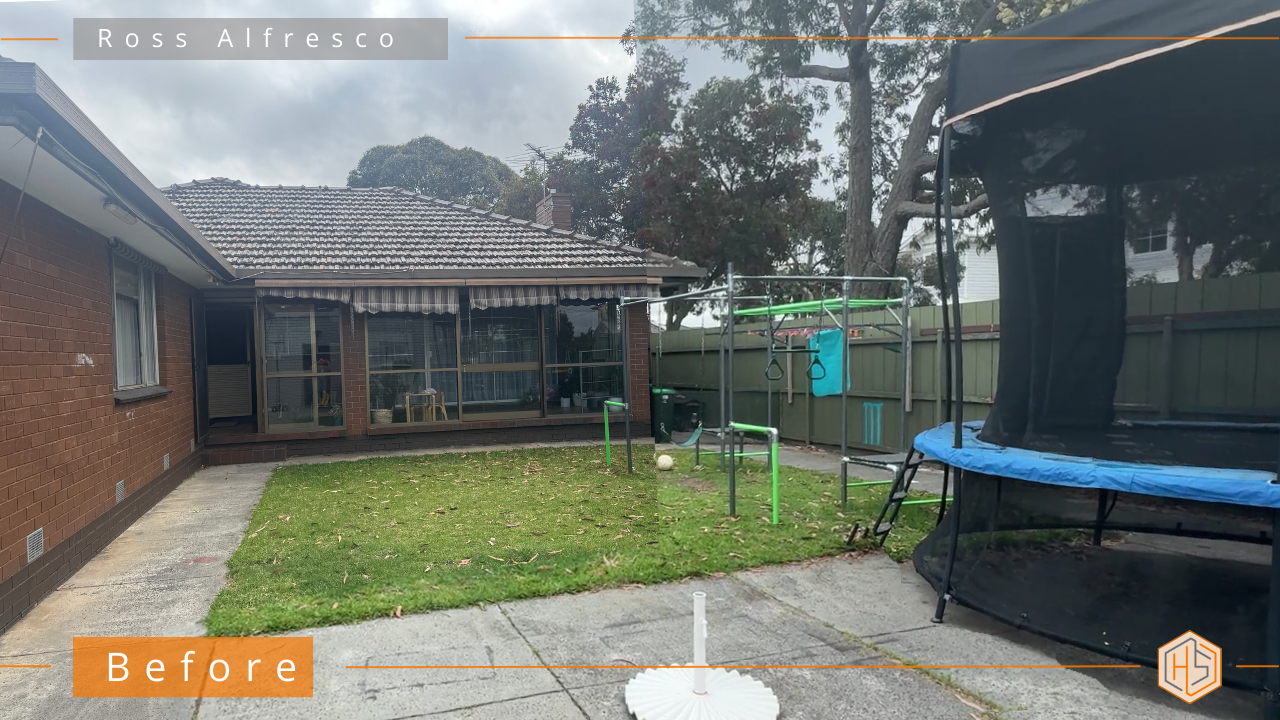
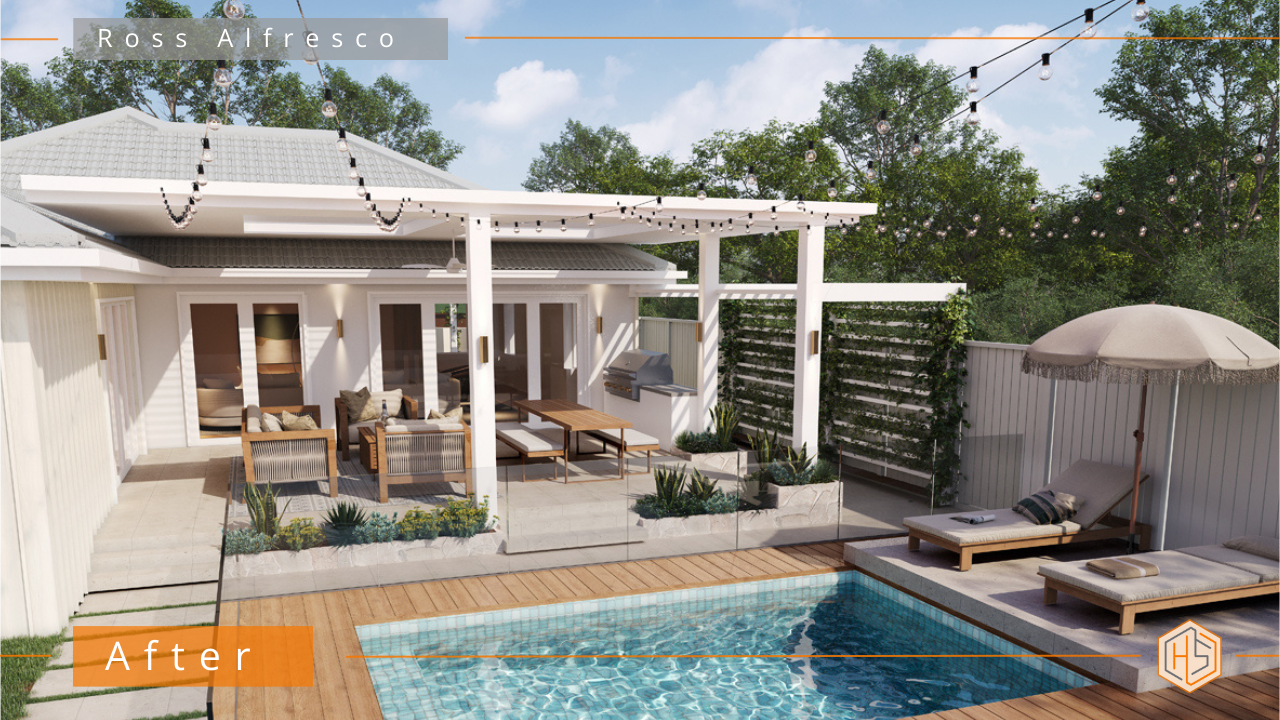
Outdoor living ideas worth considering before you begin
> Zones that work together
Successful outdoor living starts with clear zones for lounging, dining, cooking and play; connected naturally, without competing for attention. Think about how each zone relates to the next, how people move between them, and whether the layout feels calm rather than crowded.
>> Room for everyday life and extra people
Plan beyond daily use and allow for extra seating and flexibility when friends drop by. Think about where they can comfortably sit or perch, without disrupting how the space works day to day. For example, wider steps that function as both circulation and occasional seating.
>> Materials that are beautiful, but forgiving
Low-maintenance living relies on materials that deliver a relaxed, natural look without constant upkeep. Think about finishes that age well, hide wear, and suit your lifestyle – not just how they look on day one.
>> Furniture that truly fits the space
Good outdoor living design considers furniture scale, circulation and comfort – especially if re-using existing pieces. Think about how much room people need to move, sit and relax, and whether the furniture suits the proportions of the space.
>> Day-to-night usability
Thoughtful outdoor living includes lighting that works during the day and creates atmosphere at night, without overwhelming the space. Think about layered lighting that supports everyday use, entertaining and ambience – not just brightness. I love to use dimmers wherever possible!
>> Privacy without heaviness
Effective outdoor spaces balance enclosure and openness, creating privacy that feels calm rather than closed-in. Think about where privacy is needed most and how it can be achieved through layout, screening or planting, rather than solid walls.
>> Indoor-outdoor flow
Indoor-outdoor flow connects the inside to the outside with (e.g) aligned floor levels, materials and sightlines that make the alfresco feel like a natural extension, not an add-on. Pay attention to how the space will feel when you step outside, and whether the transition feels natural, cohesive and considered.
When these elements are addressed early on, your outdoor living area stops feeling like a feature tacked onto the house. It becomes the place everyone gravitates to – easy to live in, easy to share, and designed for the way real life unfolds.
Thinking your home (and outdoor living spaces) have more potential? Email me photos of your house and I’ll see how I can help… 📧 jane@hotspaceconsultants.com