
When you renovate or build, it’s easy to get swept away by the look of something – the mood board, the inspo house, the one perfect photo on Pinterest. But gorgeous exterior design that only works in photos isn’t good design.
Great design is practical, clever, climate-aware, and built to last… and it looks absolutely beautiful doing it.
This is where the magic is: you don’t have to choose between wow-factor and practicality. You can (and should!) have both.
Below are the often-forgotten, absolutely essential principles I use when designing facades for homes all across Australia.
👇👇Re-designed by Hotspace👇👇
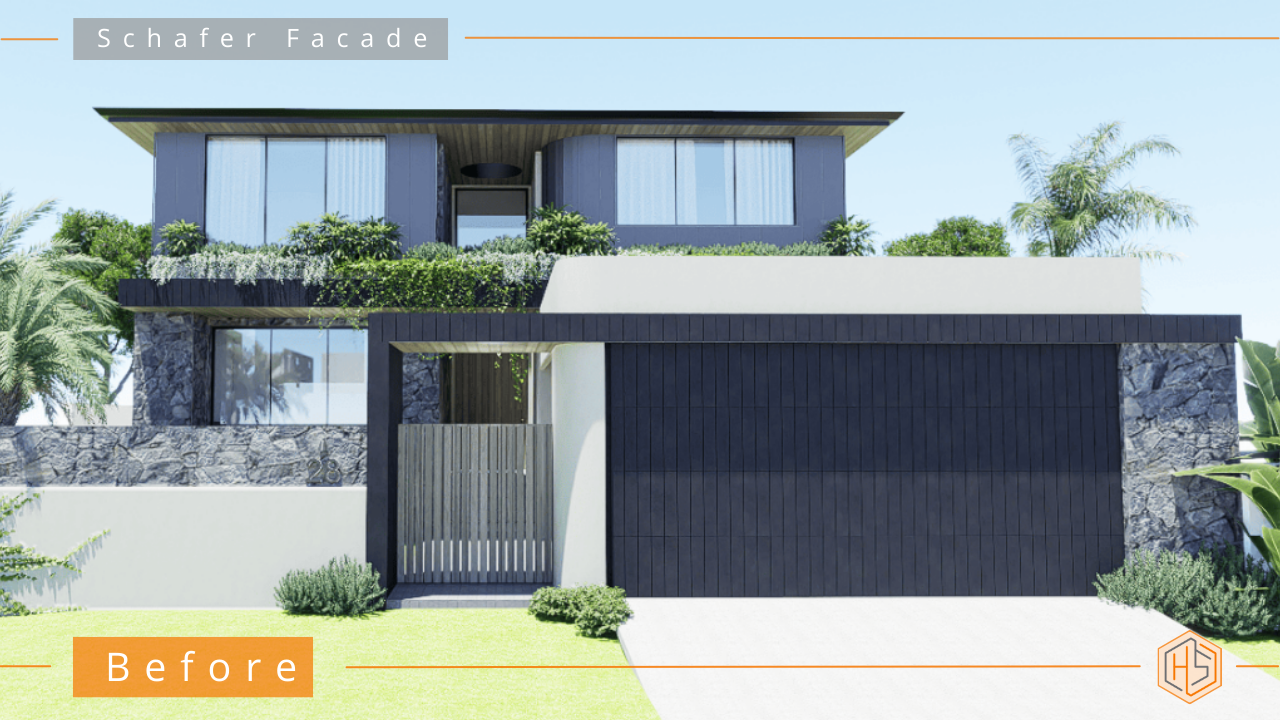
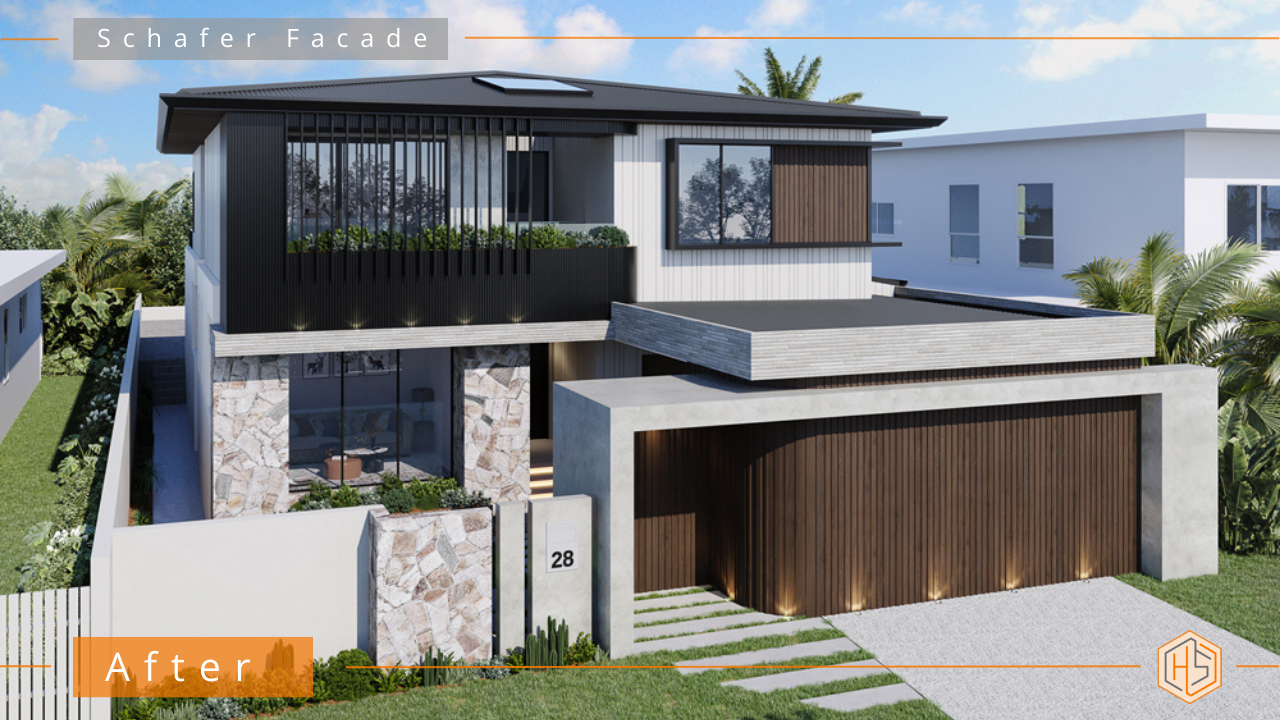
1. If You Can’t Reach It, You Won’t Maintain It
High-up planter boxes, decorative timber battens three metres in the air, top-floor windows with encroaching greenery… it all looks fabulous in the exterior design elevation.
But how will you prune, water or clean it?
Design rule: If a normal person can’t easily access it, rethink it.
Either:
- Bring the greenery down to a reachable height
- Make it artificial (strategically – still must look natural)
- Integrate irrigation
- Or remove planter boxes entirely and use vertical or climbing elements that require minimal touch-ups
Your exterior design shouldn’t demand a ladder and a near-death experience.
2. Choose Materials for the Climate You Actually Live In
Australia can be brutal – salty coastal air, harsh sun, humidity, hail, bushfire zones. Pretty materials aren’t enough; they must perform.
Low or zero-maintenance materials are the heroes:
- Composite timber-look cladding (won’t warp, rot or fade like real timber)
- Aluminium battens for a crisp architectural look that lasts
- Fibre cement cladding (Axon, Stria, etc.) – stable, durable, painter-friendly
- Rendered brick or block with a high-quality exterior paint
- Stone or porcelain cladding for feature areas that need longevity
Timber is beautiful – I love it. But by the ocean? It’s labour. Choose the timber look for low maintenance and keep the aesthetic without the stress.
3. Protect your Home From the Elements (Elegantly)
Some homes look fantastic with no eaves – crisp, modern, minimal. But in Australia? No eaves often equals:
- Water ingress
- Wall staining
- More repainting
- Hotter interiors
- UV damage to cladding and windows
If you’re after a contemporary look, there are clever ways to keep the aesthetic while creating protection:
- Slimline eaves
- Deep window reveals
- Architectural awnings
- Pergola structures
- Slight roofline extensions
You can still achieve that clean, modern look without sacrificing durability.
4. Colour Choices: Beauty and Practicality Can Coexist
The wrong white can ruin your life (and your weekends).
A very bright, blue-based white might look crisp on day one, but it will:
- Highlight every speck of dirt
- Become glary in full sun
- Make surrounding colours look harsh
- Require more frequent cleaning
Instead, choose softer, slightly muted whites (they still read as white!) but are far more forgiving and visually pleasant.
Dark colours?
Also not always your friend. They:
- Absorb heat
- Can increase internal temperatures
- Show lighter dust and salt spray
- Fade faster in harsh sun
Balanced colour palettes – mid-tones, warm neutrals, soft charcoals – often deliver the longest-lasting beauty.
5. Think Lifestyle, Not Just Aesthetics
Great exterior design should make life easier, not harder.
Some practical yet beautiful considerations:
- Lighting – Add lighting where you actually need to walk, park, unlock, and entertain – not only for aesthetic purposes.
- Driveway & Path Materials – Choose surfaces that hide dirt and tyre marks, drain well, and don’t become slippery in the rain.
- Gardens That Thrive in Your Climate – A lush tropical garden in Melbourne is a heartbreak waiting to happen. Curate plants that thrive where you live – less fuss, more flourish.
- Gutters, downpipes & drainage – Unsexy, yes. Essential? Also yes! Hidden or colour-matched gutters maintain the aesthetic while managing water properly.
- Ventilation & shading – North-facing? Add adjustable shade… Coastal? Avoid metals that rust…. Bushfire zone? Opt for BAL-rated materials.
6. Design for Zero Regret Later
Before choosing anything, ask:
- Will this still look good in five years?
- Can I maintain it easily?
- Will the harsh Australian weather destroy it?
- Have I balanced form and function?
There is always a smarter way to achieve both beauty and practicality. You don’t need to compromise – you just need to design intentionally.
7. Bonus Practical Ideas That Still Look Gorgeous
✔ Self-cleaning or low-E glass for upper-level windows
✔ Enclosed storage for bins, pool gear, and garden equipment
✔ Architecturally-integrated privacy screens (not an afterthought)
✔ Using textures (stone, brushed render, battens) to lift a simple colour scheme
✔ Choosing hardware and light fittings rated for coastal conditions
✔ Avoiding trends that will date in two years
✔ Designing for airflow and shade before resorting to air-conditioning
The Bottom Line
Practical design isn’t boring.
Practical design is smart.
And when done right, it creates facades that look incredible and stand up to the Australian climate – with less maintenance, less regret, and a whole lot more joy every time you pull into the driveway.
If you’re feeling stuck or second-guessing your facade decisions, I’m here to help – just get in touch via the link below.