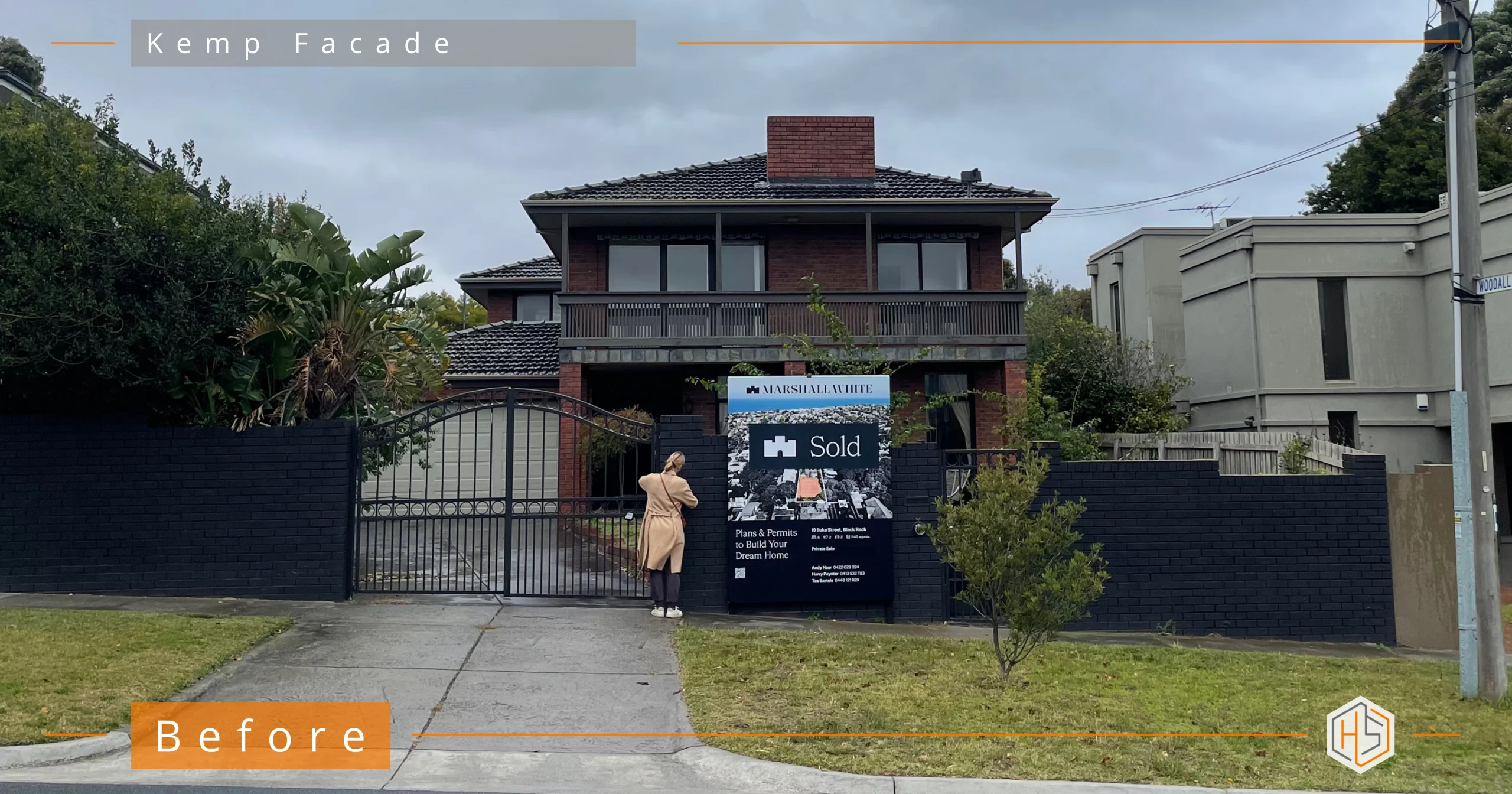
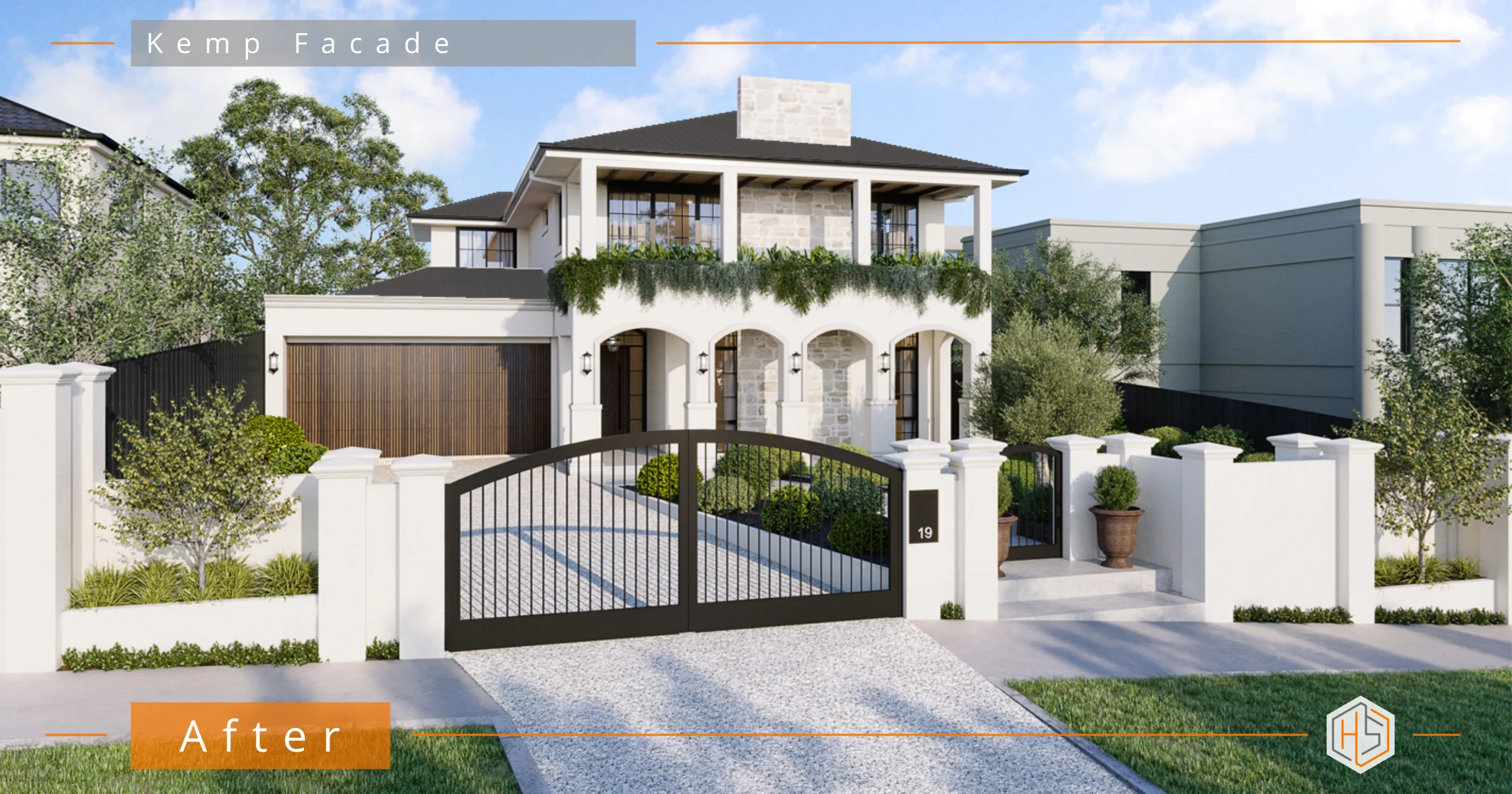
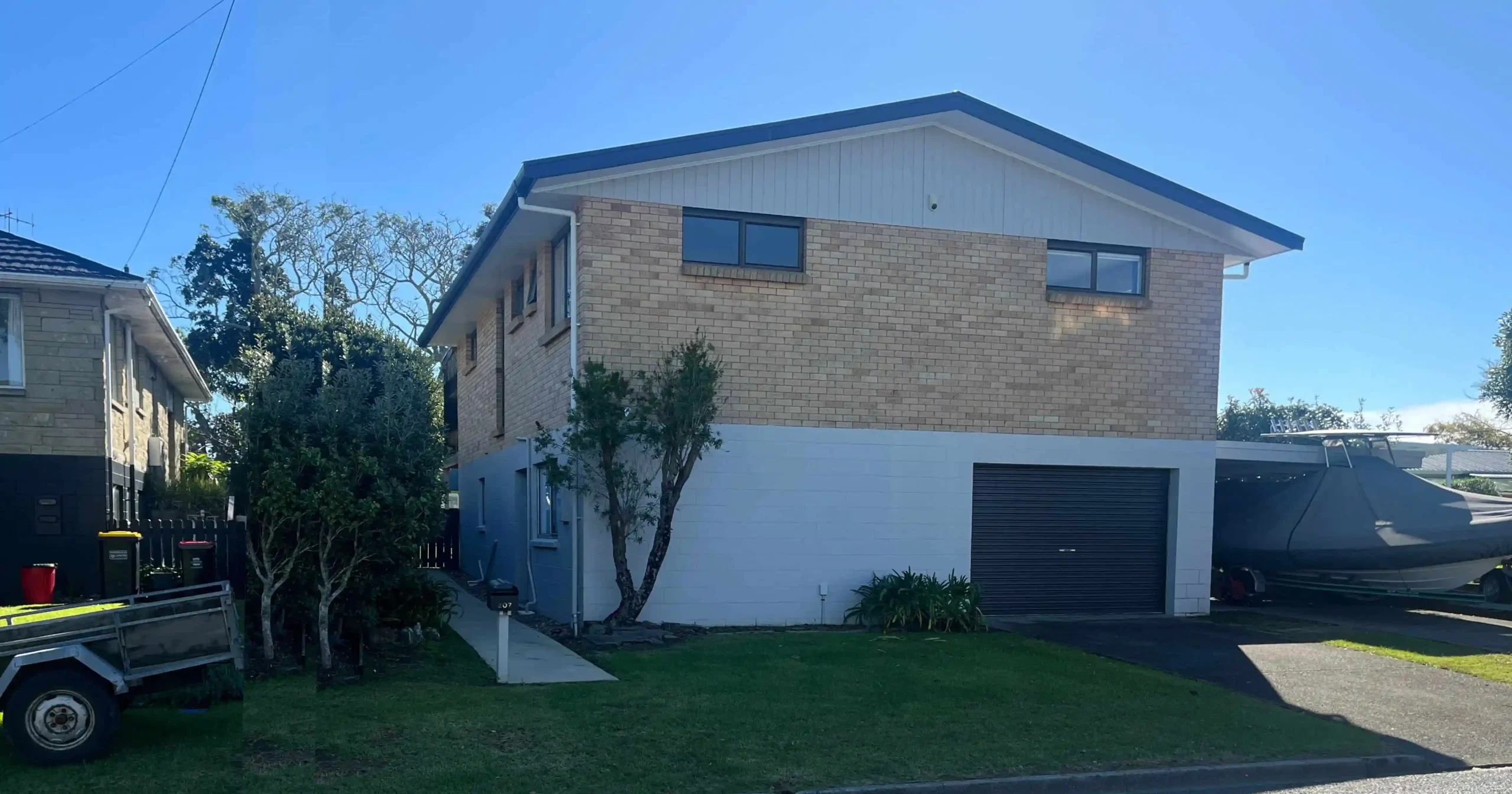
Adding an extension isn’t just about more space, it’s also your chance to transform the way your home looks and feels. A thoughtful home design plan doesn’t just solve functional needs, it creates an exterior uplift that enhances your street appeal and ties everything together beautifully.
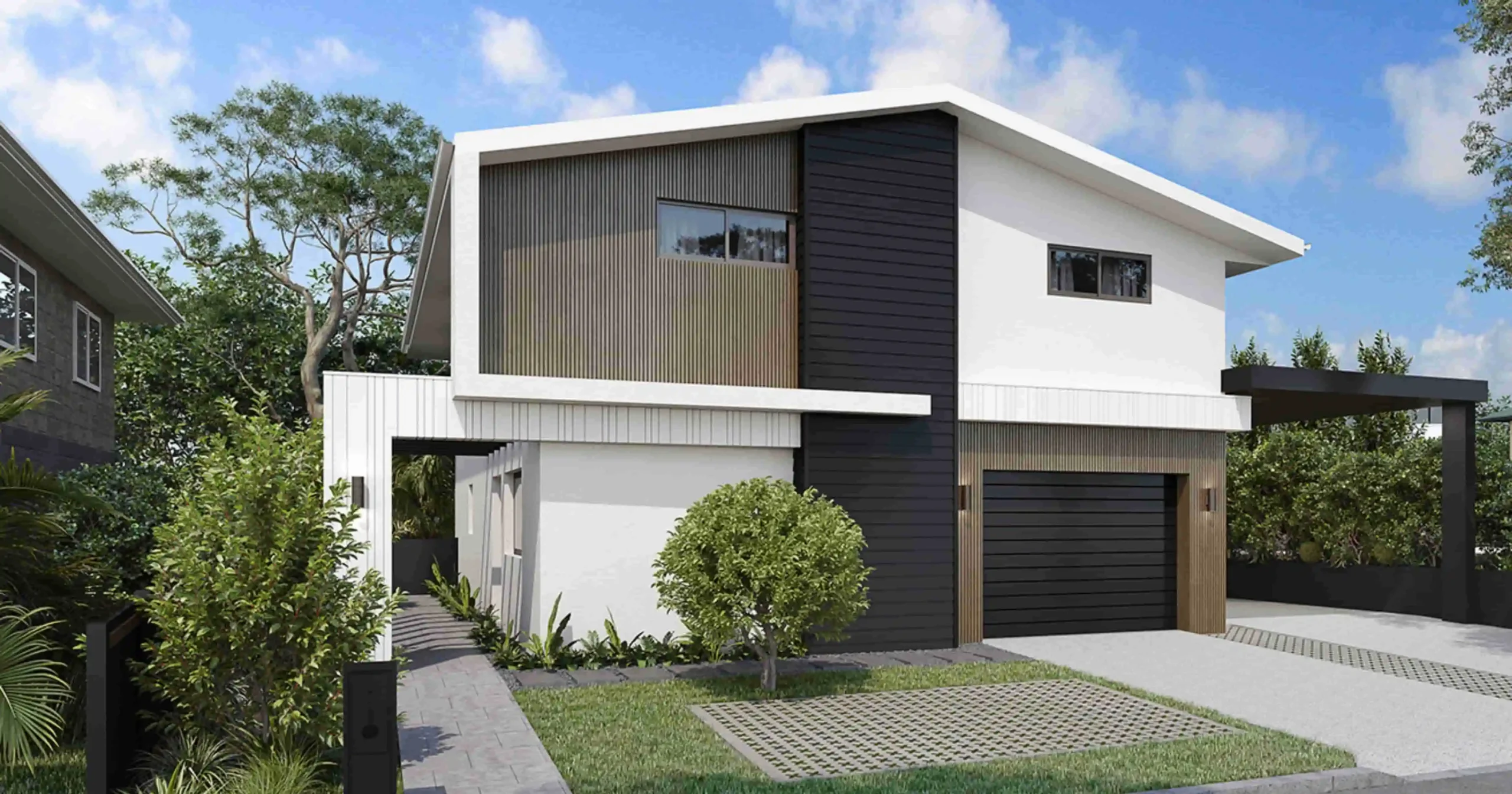
That’s exactly what we achieved for a client in the Gladstone region of Queensland. They wanted to add a new bedroom and office, but they also wanted their home to reflect a breezy, coastal style.
👇Designed by Hotspace👇
Designing with Vision
Instead of simply attaching extra rooms, we approached the project as a whole-home transformation.
-
Seamless extension: The new addition blends into the existing structure, avoiding the “tacked-on” look.
-
Coastal finishes: Reused VJ cladding (just painted), natural timber tones, and a light colour palette introduced that relaxed, beachside feel.
-
Front façade uplift: By refreshing the exterior at the same time as the extension, the home now presents as one cohesive, modern design.
The result is a functional upgrade and a stylish façade—showing how the right plan can transform a home inside and out.
From Concept to Council
Once the design vision is complete, the next stage is technical. A draftsperson or building designer will take our concept and:
From there, the builder can bring the project to life.
Why a Home Design Plan Matters
An extension is a big investment. Without a well-considered design plan, you risk mismatched spaces and missed opportunities to add real value. A clear plan ensures:
-
Functional flow between old and new spaces
-
A unified architectural style
-
Long-term appeal that enhances property value
This Gladstone project demonstrates how an extension is more than extra rooms; it’s about creating a cohesive, beautiful home that reflects your lifestyle.
Need help with your facade and front yard? Here’s what Hotspace offers…
- Personalised, done-for-you design concepts focused on street appeal and resale value
- Detailed plans and trusted material recommendations
- Access to industry know-how, without the overwhelm
- Real-world case studies to inspire and guide your decisions
Jane https://hotspaceconsultants.com/preliminary-enquiry/
House facades very often get weighed down by unnecessary clutter. Layer upon layer of details, materials, and plants to the point where the true architecture gets lost in the chaos.
Here’s what I do when confronted with a too-busy looking house. I incorporate clean lines and simplify the facade with intentional, interesting (pared back, not chaotic) colours, materials, products and yes, landscaping. A home that nails the balance between simplicity and wow-factor can be nothing short of transformational (as you can see in our gallery here).
1. Landscaping ideas that emphasise simplicity
Landscaping ideas should work with your home’s architecture, not compete against it. I see it on every drive through older neighbourhoods: homes overwhelmed by tangled gardens or oversized beds that crowd the entry. Instead, go for:
- Low-maintenance, sculptural greenery like clipped hedges, feature trees, and layered, low planting in just a few restrained varieties
- Simple, defined garden edges (think steel or other slimline borders)
- Gravel, stone or timber pathways with clean geometry for structure
- Quality, textural groundcovers rather than masses of mixed plantings
By decluttering your landscaping, you let the facade itself take centre stage, and the whole exterior immediately feels more sophisticated.
👇Designed by Hotspace👇
Simplifying a facade isn’t about stripping away personality. It’s about editing – removing fussy trim, dated features, or mismatched materials, then adding back just enough for impact.
- Replace busy brickwork or stone with smooth render or vertical cladding
- Use modern screening elements in timber or black steel for privacy and shadow play
- Add statement entry steps in concrete or wide timber treads
- Introduce linear planters or subtle retaining walls to anchor the look
3. Street appeal from unified materials and finishes
Too many homes try to grab attention with ‘statement’ everything – bold columns, quirky rooflines, a riot of tile patterns. The real power move? Simple cohesion.
- Stick to a restrained palette of neutrals
- Use just two or three main materials to avoid visual clutter and add in a few small accent areas
- Carry the same material or colour across different areas for flow, repeating cladding or timber on garage doors, fencing, or feature walls
- Limit the number of accent features so each one feels intentional
Want to see how mastering material selection pays off? Check our new build and extension projects: https://hotspaceconsultants.com/new-build-extensions-facade-design/
4. Landscape lighting ideas for a modern facade
An amazing facade deserves to shine after dark and the right landscape lighting extends those clean lines well into the evening.
- In-ground uplights to highlight crisp wall planes or sculptural tree forms
- Slimline wall sconces that define entrances and frame pathways
- Subtle recessed LED strips under steps or along garden edges for drama
No over-the-top lanterns or floodlights; just careful placement to draw the eye where you want it.
5. Why simplifying is the ultimate facelift
Great facade design looks effortless, but it’s intentional – from landscaping ideas right through to colour selection. Simplifying means:
- Less visual noise, more wow-factor
- Lower long-term maintenance with enduring materials and considered planting
- Space for your home’s architectural lines to shine, not get buried
- Stronger first impressions
Need help with your facade and front yard? Here’s what Hotspace offers…
- Personalised, done-for-you design concepts focused on street appeal and resale value
- Detailed plans and trusted material recommendations
- Access to industry know-how, without the overwhelm
- Real-world case studies to inspire and guide your decisions
Jane https://hotspaceconsultants.com/preliminary-enquiry/
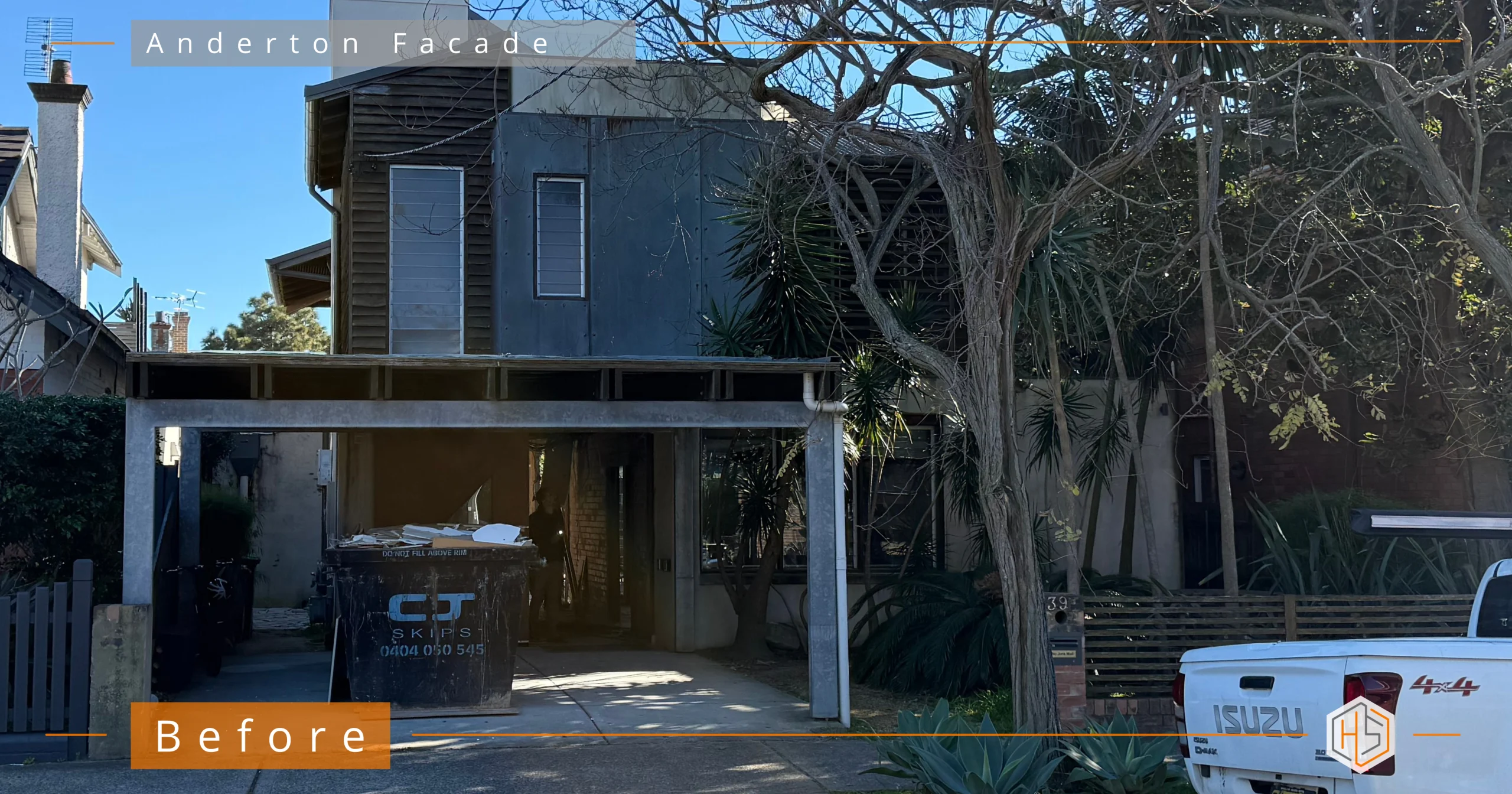
Houses that sit close to the street pose their own set of challenges. Suddenly, every detail – good or bad – is on show to everyone! If you’re searching for facade ideas for houses with minimal setback, keep reading.
Want to see what’s possible? Browse our gallery: https://hotspaceconsultants.com/gallery/
1. Facade ideas for houses: Create depth without overwhelm
When your facade is just metres from the footpath, scale and proportion become critical. Heavy, chunky finishes can feel overpowering up close, so aim for a layered but refined approach:
- Combine a few contrasting materials to add depth — but keep the palette deliberate, not busy
- Use smaller-scale finishes and slimmer profiles so details feel elegant when viewed up close
- Incorporate see-through gates or fencing to draw the eye beyond the front boundary and give the facade breathing space
- Use mid-tone fencing colours (like soft grey) to balance light and dark elements of the home
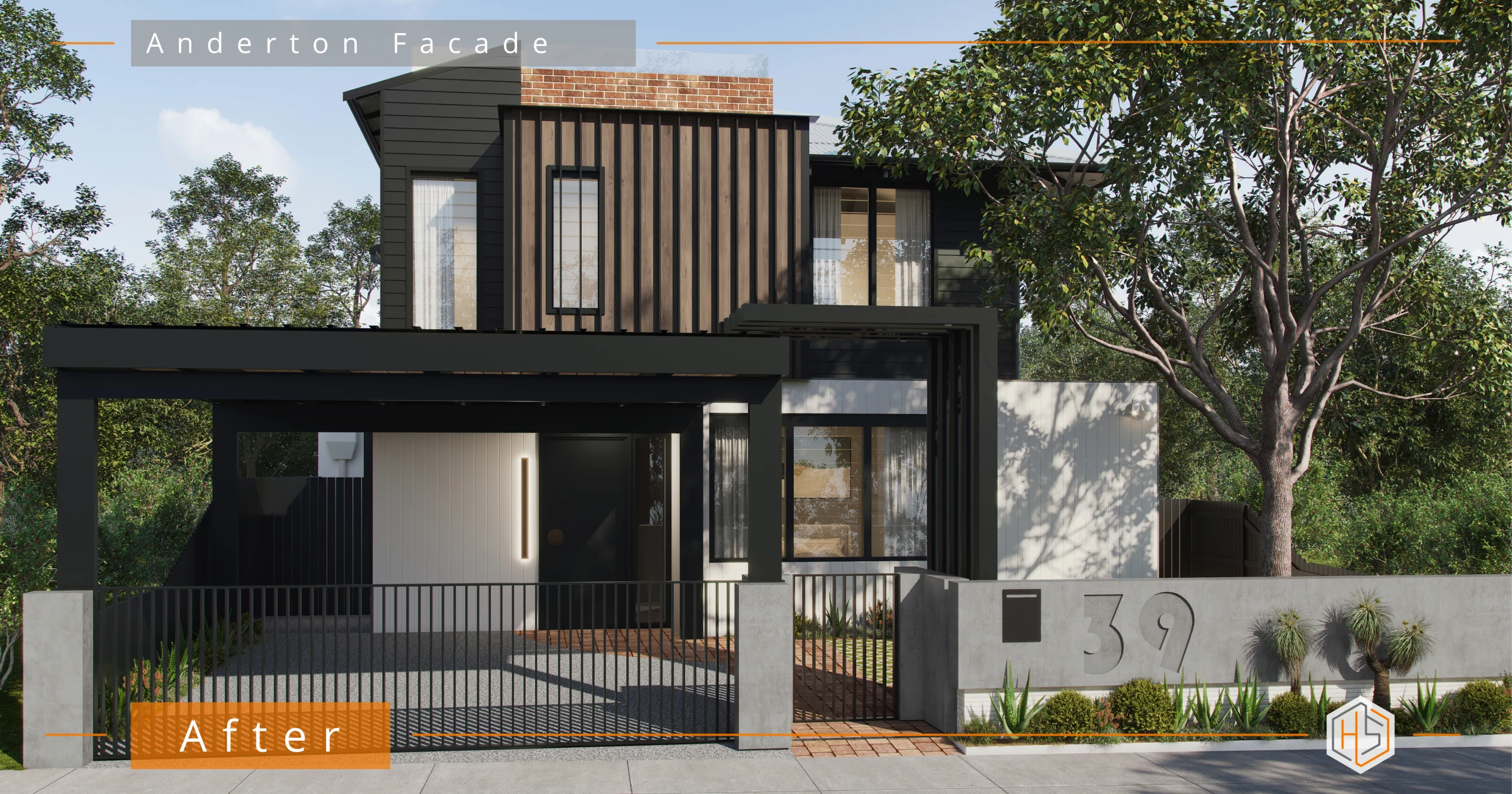
Anchoring these layers with landscaping creates a softer focal point at eye level – so instead of the two-storey facade dominating, the garden greets visitors first.
👇👇Designed By Hotspace👇👇
2. Materials and colour scheme: Play with contrast for balance
Material and colour choice can make or break a close-to-the-street facade. Here’s what works beautifully:
- Crisp white or off-white on the ground level to feel fresh and open
- Darker tones upstairs to visually push the upper storey back
- Textural contrasts such as vertical timber-look cladding, smooth render, and brick (in this project, we actually added brick for extra interest)
- A fence colour that bridges the gap between your light and dark tones for a cohesive look
These choices keep the facade visually balanced and inviting — without shouting at passers-by.
3. Facade ideas for houses: Architectural details with presence
Up-close facades benefit from bold yet proportionate architectural touches that add visual interest without overwhelming:
- A statement entryway — think wide doors, an oversized portico, or custom detailing
- Structured rooflines to create balance and break up large surfaces
- Deep window reveals or box-out forms for subtle depth and shadow
- Discreet feature lighting to highlight form and texture at night ✨
Close-to-the-road homes can absolutely have presence without feeling imposing. It’s all about balance, layering, and giving the eye somewhere to rest.
If you’re struggling to bring it all together or worried about making a mess of your facade, get in touch via the link below.
Jane
https://hotspaceconsultants.com/preliminary-enquiry/
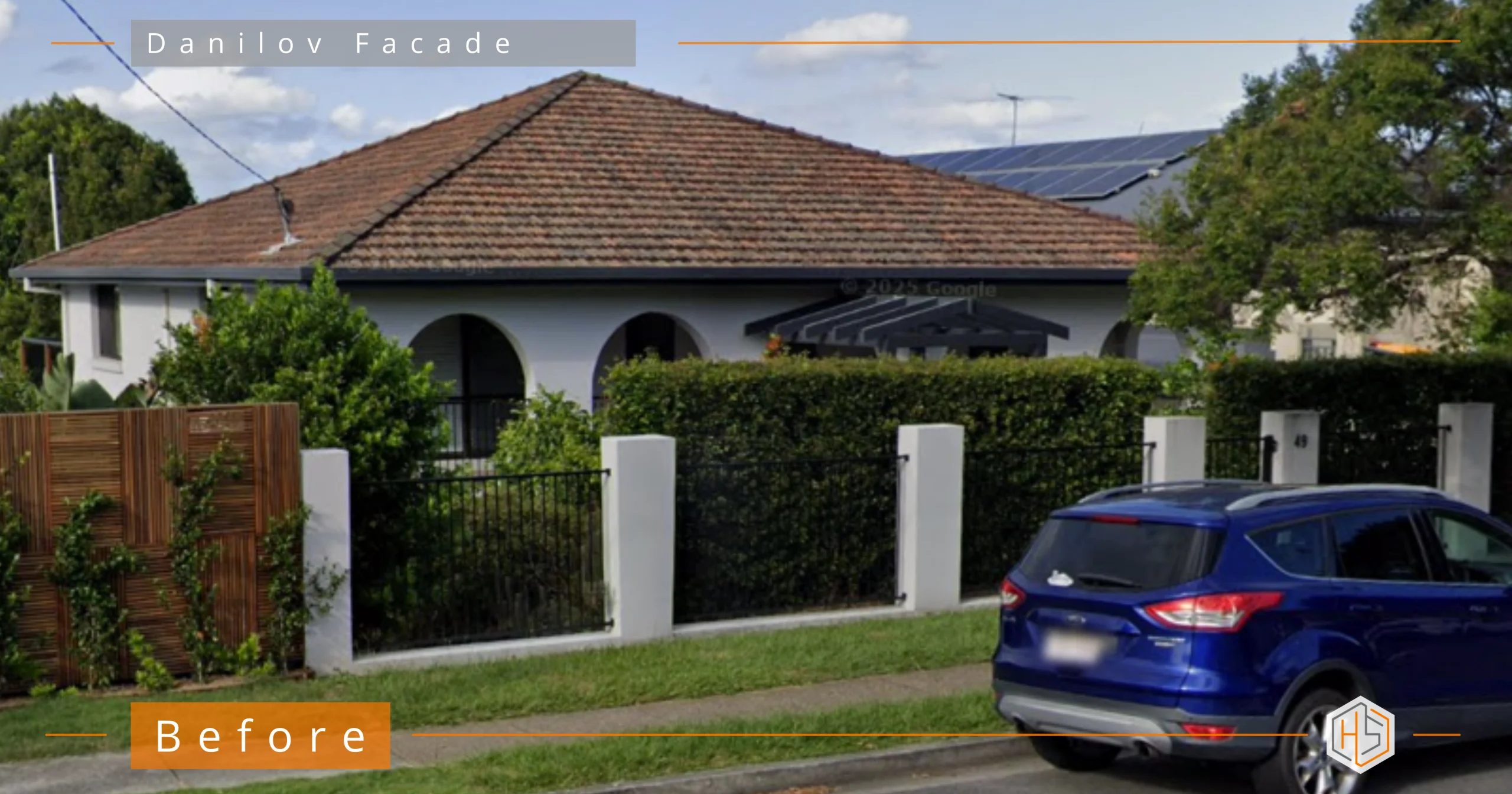
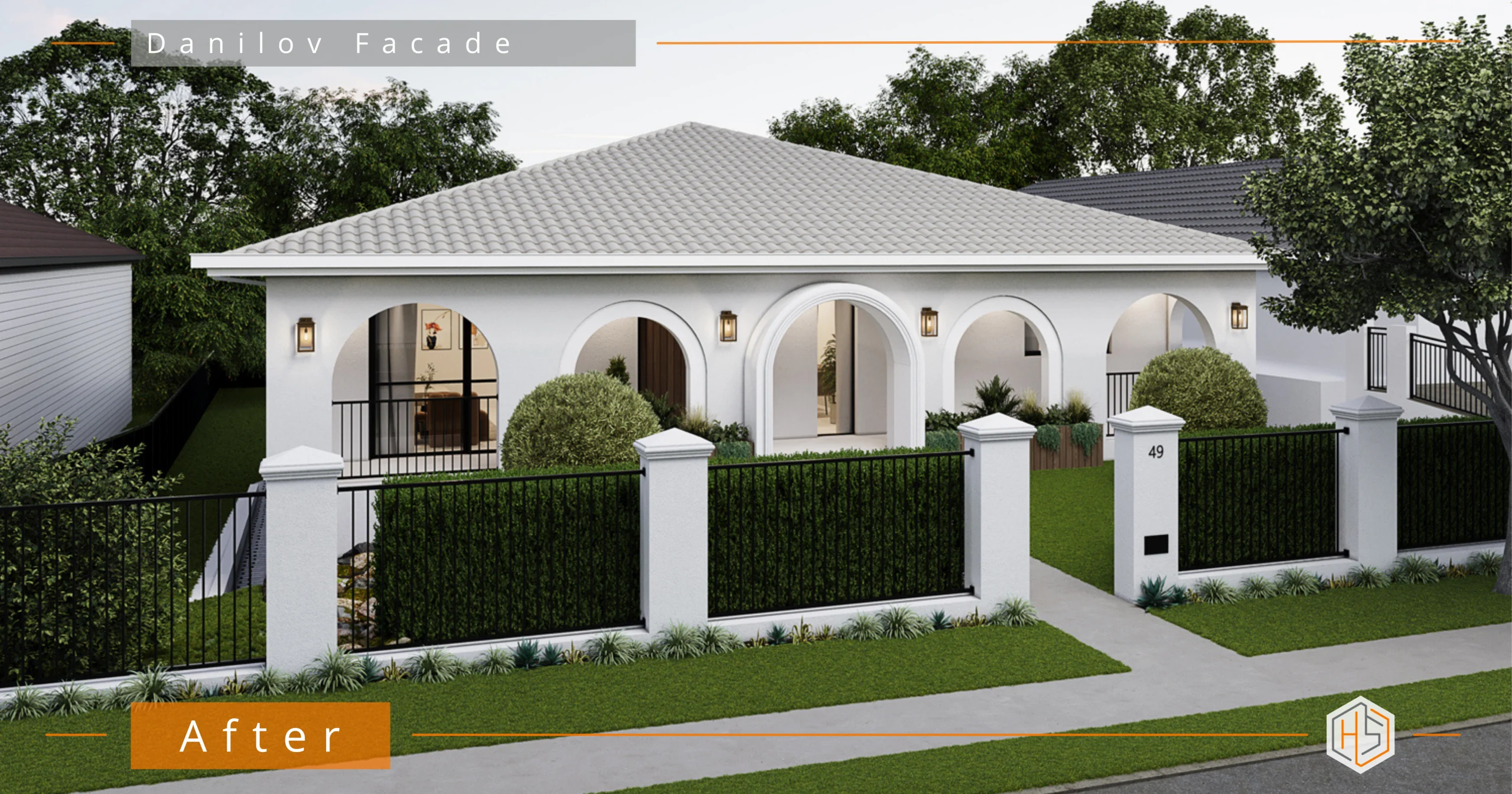
Renovating your home? The right house facade ideas often start at the very top – the roof. Ignore it, and you risk undermining everything else. Nail it, and you can unlock instant kerb appeal. Want to see how roof colour can reshape your home’s whole presence? Flick through the Hotspace gallery and it jumps out.
1. House facade ideas: your roof colour sets the tone
Roof colour is the single most dominant feature on many homes, especially those with wide, low-pitched or gabled roofs. The wrong shade draws the eye (for all the wrong reasons!). The right one instantly creates a cohesive, modern, and confident look.
- Light greys amplify clean lines, inviting light and openness
- Deep charcoals create contrast and drama – perfect for understated but wow-factor facades (but must be used in the right climate/location)
- Greys work everywhere, from contemporary builds to mid-century homes, tying together mixed materials
Get the tone right, and this can help every other material (eg cladding, render, stone) fall into place.
👇👇Designed By Hotspace👇👇
2. Why matching matters
You’ve probably seen it, a stunning home rendered or with new cladding, spoiled by a roof stuck in the past. Coordinating colour, texture, and finish between your roof and facade is crucial.
- Choose a roof colour that harmonises with new cladding or render
- Echo a roof shade in window frames or garage doors for unity
- Step away from old-fashioned terracotta (unless you’re going specifically for a Mediterranean look, of course!) and go for low-key greys
Even seemingly minor roof tweaks make a whole home feel modern, elevated, and expertly pulled together.
3. Avoiding the most common mistakes
Modernising your home often means undoing decades of mistakes, like picking a popular roof colour at the time but not considering future changes.
- Avoid high-gloss finishes and never, ever (IMO!) do a white roof. It’ll look dirty and date faster than you can say “Wasn’t it pristine just last Tuesday before the possums tap-danced across it in the rain?”
- Forgo colours. Full Stop! Red, blue or green will always feel stuck in the past
- Don’t pick your roof and wall colours in isolation; they work as a team
Still feeling unsure how to connect your roof with the facelift you’re planning? A done-for-you facade design package spells it out – right down to exact tile colours and finishes. Get started here: https://hotspaceconsultants.com/exterior-facelift-house-facade-renovation-hotspace/
Jane https://hotspaceconsultants.com/preliminary-enquiry/
Looking for facade ideas with rendered brick? It’s one of the most effective ways to modernise a tired exterior. A simple render can clean up mismatched brick, add instant street appeal, and give your home a fresh, contemporary look without rebuilding from scratch.
But render on its own isn’t always enough. The secret is in how you combine it with other textures, colours, and details to create something that feels stylish and complete. Whether you’re aiming for a soft coastal look or a bold, modern design, rendered brick gives you a beautiful blank canvas to start with.
Let’s look at how to make it work.
👇👇Designed By Hotspace👇👇
1. Rendered brick can completely transform the front of your home – not just by covering the old surface, but by creating a crisp, uniform finish that elevates the whole design. Here’s why it’s so popular:
- It hides outdated or mismatched brickwork
- It instantly modernises the look of even a basic home
- It works beautifully with neutral colour schemes
- It pairs easily with other materials like cladding, timber and stone
Quality facade renovations like these usually range from $50k-$70k and upward (rendering PLUS other updates – depending on what you do of course). Worth every cent when you see the transformation.
2. Render doesn’t have to mean flat and boring. In fact, some of the most striking facades I’ve designed use render as a base and layer other materials over it to create contrast, texture, and personality. Here’s how to make it sing:
- Pair render with warm timber features like vertical battens or panels
- Use stone-look or concrete-textured cladding for visual depth
- Add stepped sections or recesses for subtle architectural detail
- Frame windows and doors with deep reveals to create shadow and interest
The best facade ideas with rendered brick usually involve contrast – mixing smooth finishes with natural textures to create a home that feels balanced and full of character.Adding character with rendered brick
3. Choosing colours that last. One of the biggest advantages of using rendered brick is the flexibility it gives you with colour. But that doesn’t mean anything goes. A timeless palette is always your best bet if you want long-term kerb appeal. Some options I recommend often:
- Soft whites or off-whites for a clean, fresh look
- Mid-greys or charcoal for a bold, elegant finish
- Timber accents to warm things up and break the monotony
- Simplified trims and gutters so the render takes the lead
And don’t forget – always test your colour in natural light. Render absorbs and reflects colour differently than other surfaces, so it can surprise you once it’s on the wall.
4. Avoiding common mistakes. There’s a big difference between a modern, cohesive facade and one that’s just rendered. If you’re going to invest in a rendered brick upgrade, it’s worth doing it properly. Here are a few mistakes to avoid:
- Over-rendering the house and losing its sense of proportion
- Picking trendy finishes or colours that won’t age well
- Using too many textures or details without a clear design plan
- Choosing cheap workmanship that lets down the final look
If you’re considering your own renovation and want to avoid costly missteps, take your time exploring facade ideas with rendered brick that truly suit your home, your style, and your street. And if you need some guidance to make sure you have street appeal so stylish the neighbours will be jealous… send me some photos (link below or email me jane@hotspaceconsultants.com) and I’ll see if I can help!
Jane https://hotspaceconsultants.com/preliminary-enquiry/
Sorry to be a Debbie-Downer, but beautifully renovated/designed home exteriors don’t come from flicking through inspiration images for kerb appeal ideas and picking your favourite paint. Unfortunately, this very common little misstep can become a pretty costly lesson. If you want a seamless, cohesive look that really wows, don’t wing it – start with the right strategy from the outset. For real-life examples of what works, take a look at my before and after’s gallery
1. Kerb appeal ideas that can go wrong (and why)
Sadly, not all kerb appeal ideas and trends you find on the internet will translate well on your home. I’ve lost count of houses I’ve driven past, where mismatched materials, feature walls gone wrong, or not-quite-right paint choices create more confusion than style. Here’s what often goes awry:
- Using too many competing materials in the wrong way: timber, stone, render, all clashing instead of working together
- Choosing colours that don’t quite work together
- Trying to mimic magazine homes without considering your house’s true shape or era
- Overdoing the “statement” features, like a chunky pillar or loud cladding, so nothing feels special
👇👇Designed By Hotspace👇👇
2. Make a plan before you begin
Imagine you’ve finished building your home or renovating your facade/exterior. You like it – but you don’t LOVE it! This could have been avoided with a clear plan and cohesive vision. When you anchor every design decision in a consistent aesthetic, the finished project feels intentional instead of accidental. Here’s what makes the difference:
- Start by defining one strong statement element, such as a sleek new entry or timber accent
- Limit yourself to two or three complementary textures (e.g. render, vertical cladding, and smooth timber)
- Stick to a timeless, neutral colour scheme… think whites, off-whites, grey, charcoal, timber, or black
- Overlay horizontal or vertical lines to break up boxy shapes and draw the eye
- Reference the home’s era to guide modern updates, so your facade feels considered, not forced
This strategy ensures your investment pays off not just today, but for years to come. See how a coordinated facade plan works for both classic renovations and new builds here
3. Materials, colours and finishes that bring your home to life
The fastest way to elevate the street presence of your home is by focusing on quality architectural features. I always recommend high-impact materials and finishes that deliver sophistication:
- Vertical timber panelling for warmth and dimension – from light Oaks to darker timbers
- Rendered surfaces in soft whites or pale greys
- Sharp, matte black trims to give the design punch without overpowering
- Timber or composite battens for shading and privacy, adding texture and visual layers
- Simple, wide-format rooflines. No quirky shapes or fussy details
The trick is restraint: too many features, and it slips into chaos; too few, and you risk another cookie-cutter result.
Every home exterior (unlike kitchens/bathrooms etc) needs tailored kerb appeal ideas – not generic templates. Working with a professional exterior designer means you avoid the most common – and the most expensive, pitfalls. Clients come to Hotspace often after they’ve already tried but failed to improve their current or previous home – or they’ve watched neighbours and friends botch their own new homes or renovations.
Here’s what expert help provides:
- Personalised facade concepts – no recycled Pinterest tricks
- Timeless, layered colour schemes chosen for your specific site and home
- Detailed design specs for easy implementation
- Recommendations for trusted material suppliers so what’s on paper works in real life
You deserve a home that turns heads and feels completely yours – from the very first glance. So if you want to make sure you achieve that (and worried you can’t do it on your own) you can get in touch with me directly via the link below.
Jane https://hotspaceconsultants.com/preliminary-enquiry/