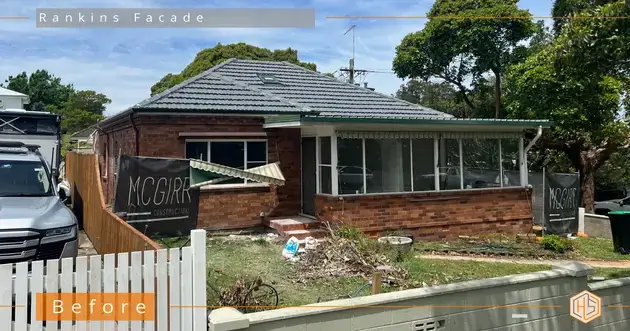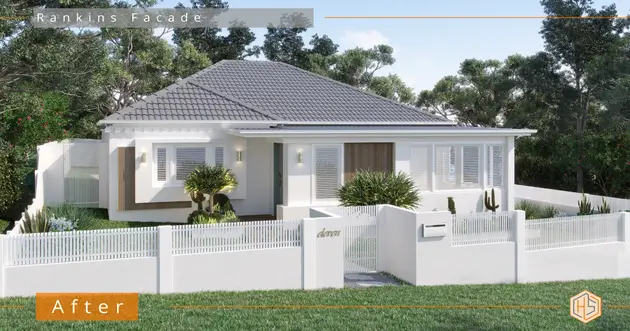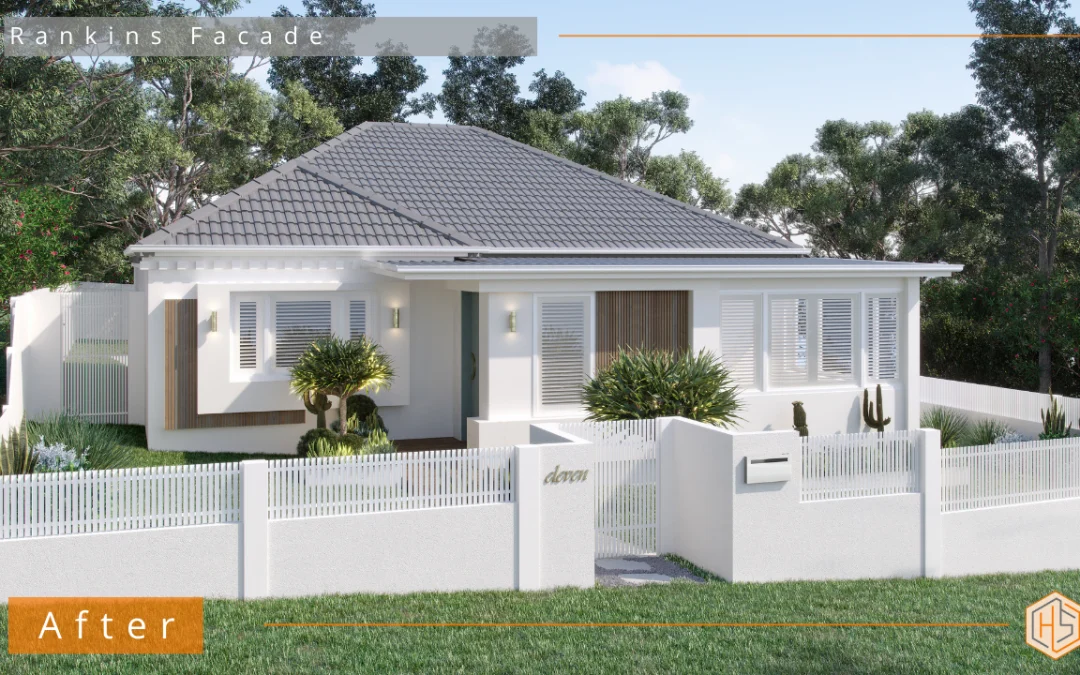
Renovating your home’s exterior is a great way to boost its street appeal and increase its value, but how much does an exterior renovation cost? With construction costs skyrocketing over the past few years, it’s crucial to plan your budget carefully. From painting to full facade transformations, let’s break down the costs and what you need to consider.
👇👇Designed by Hotspace👇👇
The Cost of a Paint Job
If you’re planning to repaint your home’s exterior, be prepared for a minimum investment of $15,000 – $20,000 in some areas, depending on the size of the house, access challenges, and the condition of the existing surfaces. Labour and material costs have surged, so getting multiple quotes and understanding the scope of work is essential.
DIY vs Hiring a Main Contractor
One of the biggest factors affecting renovation costs is who manages the project. Co-ordinating your own trades can reduce your overall exterior renovation cost, but only if you have the time and know-how to manage everything effectively. If you’re busy or inexperienced, hiring a contractor to oversee the project is 100% worth it to avoid costly mistakes.
For those who want a balance, you can engage a main contractor for the trickier parts—such as areas where trades need to be carefully coordinated (e.g., ensuring painting is done after rendering but before window installations). Meanwhile, you can directly engage other independent trades, like fencing contractors, to save money.
Cost Breakdown: Exterior Renovation Cost Estimates
Renovation costs can vary significantly depending on the materials, complexity, and trades required. Below is a general price guide based on square metre (sqm) rates:
| Renovation Type |
Estimated Cost per sqm |
Notes |
| Exterior Painting |
$40 – $80 |
– Includes preparation (cleaning, minor repairs), primer, and multiple coats.
– Labour costs can be higher for multi-storey homes or difficult access. |
| Rendering |
$50 – $120 |
– Costs depend on the texture, finish, and any additional sealing or smoothing required.
– Acrylic render often falls on the higher end of the range. |
| Cladding Installation |
$150 – $350 |
– Varies significantly by material (e.g., timber, metal, composite).
– Includes labour, fixing systems, and possible insulation layers. |
| Roof Restoration |
$30 – $100 |
– Typically covers cleaning, repairs (repointing, tile replacement), sealing, and painting.
– Metal roofs or specialty coatings may push costs higher. |
| Window & Door Replacement |
$1,000 – $3,500 per unit |
– Includes removal of existing unit, supply of new unit, and installation.
– Custom or high-performance (double/triple-glazed) can reach or exceed the top range. |
| Fencing |
$200 – $600 per metre |
– Material choice (timber, colorbond steel, masonry, etc.) greatly impacts cost.
– May include demolition of existing fence and site preparation. |
| Driveway Resurfacing |
$80 – $200 |
– Typically for a new surface layer (concrete, exposed aggregate, paving).
– Full-depth replacement or complex patterns cost more. |
Additional Notes & Considerations
- Location and Access
- Inner-city areas or remote regions may have a premium due to higher labour rates or travel costs.
- Difficult site access (narrow driveways, steep blocks) can push labour costs up.
- Quality of Materials
- Mid-range materials fit within the lower-to-mid estimates; premium materials or custom finishes can exceed the higher ranges.
- Labour Variations
- Tradespeople with extensive experience and strong reputations often charge more but can deliver higher-quality finishes and faster turnaround times.
- Unexpected Extras
- Structural repairs, termite damage, rot, or asbestos removal can add to your total. Always keep a 10-15% contingency in your budget to handle any surprises.
- Time of Year
- Certain renovations (like painting or roof work) are sometimes more expensive in peak seasons when contractors are in high demand.
All in all, these ballpark figures should help you estimate your budget and weigh up the cost-benefit of each project. It’s always best to get detailed quotes from multiple contractors to nail down more accurate pricing for your specific location and renovation scope.
Budgeting for Overruns
No matter how well you plan, unexpected costs will arise. Whether it’s structural repairs, material shortages, or delays, always allow an extra 10-15% buffer in your budget.
How to Work Out Your Maximum Spend
To avoid over-capitalising, compare your home’s current value to its potential post-renovation value. Here’s how:
- Check recent sales – Look at realestate.com.au and domain.com.au for properties similar to yours.
- Estimate your home’s value now – Consider its condition compared to those recently sold.
- Estimate your home’s value after renovation – Look for homes with a finished exterior similar to your planned design.
- Calculate the difference – Your renovation budget should not exceed the gap between these two values.
For example, if similar homes sell for $1.8M, and yours is worth $1.6M now, your maximum renovation budget should be $200K to ensure you don’t over-capitalise.
Final Thoughts
Renovating your home’s exterior is an investment, but with exterior renovation costs, smart budgeting is more important than ever. Whether you DIY parts of the process or hire a contractor to manage it all, planning carefully and leaving a contingency buffer will ensure a smoother renovation with fewer financial surprises.
Thinking about an exterior renovation? Get in touch for expert guidance on your home’s transformation.
Jane – https://hotspaceconsultants.com/preliminary-enquiry/
Planning an exterior renovation for 2025 will be an exciting journey, but knowing where to begin can feel daunting. When transforming a dated facade, careful planning is the key to success. Here’s a step-by-step guide to help you navigate the process with confidence.
👇👇Designed by Hotspace👇👇
1. Take Inventory of What Needs Attention – Start by assessing your home’s exterior and creating a detailed inventory. Divide it into three categories:
– Non-negotiables: These are existing items that are essential for functionality or curb appeal, such as replacing rotting timber, outdated windows, cracked render, faded cladding or a damaged roof.
– Negotiables: These are existing items that are in good condition but that if changed, would dramatically improve the overall look of your home. This can sometimes include items that don’t even exist yet – such as a new entrance feature, a new carport, new windows or new cladding.
2. Define Your Theme or Style – A cohesive design is essential for a successful exterior renovation. Start by identifying the style or theme you want to achieve. For inspiration:
– Look at architectural features of your home.
– Collect images of houses that resonate with you.
– Consider themes that align with your local area or personal taste, such as Modern Coastal, Hamptons or Contemporary.
3. Set a Realistic Budget – Determine how much you’re willing to spend and allocate funds for key areas: materials, labour, and any professional services you’ll require. Be prepared for unexpected costs by including a buffer of 10-15% in your budget.
4. Work Out Colours and Design Details – Choosing colours and finishes that harmonise is a critical step. To ensure everything works well together:
– Use sample boards to combine colours, cladding, and other materials.
– Test paint swatches on your home’s exterior to see how they look in natural light.
– Seek advice from a professional designer to ensure the final look is cohesive and timeless. A company like Hotspace will provide all the design details for you in a written checklist as well as a colour illustration (as seen above).
5. Decide How You’ll Manage the Project – Managing an exterior renovation yourself can save money but requires time and effort. Hiring a professional can streamline the process but will cost more. Here’s a middle-ground tip: DIY Management with Strategic Help: Take on the role of project manager but hire experts for complex tasks. For example:
– Find and coordinate your own tradespeople (painters, roofers, tilers).
– Engage a builder or project manager for challenging aspects, like constructing a new front entrance or extending rooflines.
This approach can give you control over your budget while ensuring quality results for specialised elements.
6. Tips for a Successful Reno
– Start with a plan: The more details you iron out upfront, the smoother the renovation will go.
– Focus on the facade first: This is the first impression of your home, so get it right.
– Think long-term: Choose materials and designs that will stand the test of time.
– Leverage expertise wisely: Sometimes, hiring an expert for even a small part of the project can make a big difference.
Planning an exterior renovation thoughtfully will set you up for success. Whether you’re managing the entire project yourself or calling in the pros for key tasks, the goal is to create a home that’s not only beautiful but also functional and aligned with your vision. With these steps, you’ll be well on your way to achieving a stunning transformation!
Ready to Start Your Exterior Renovation?
Get in touch for professional guidance on designing a facade that transforms your home into a showstopper. Let’s create something extraordinary together!
Jane – https://hotspaceconsultants.com/preliminary-enquiry/
This brick exterior home transformation in South Australia proves that even the most dated red brick homes can be brought into 2024 with the right design choices. My clients were eager to move away from the exposed brick look and create a modern, cohesive facade that felt connected and welcoming.
The Challenge
With a lot of red brick dominating the exterior and the front door placed awkwardly upstairs, the house felt disconnected and unbalanced. It lacked a focal point and the flow needed to make the design feel intentional and inviting.
👇👇Designed by Hotspace👇👇
The Solution
To achieve a stunning brick exterior home transformation, I introduced key design elements that modernised the facade:
- Render and Cladding:
The dated brick exterior was replaced with modern render, timber-look cladding, and stone cladding. These materials add texture, warmth, and visual depth, instantly lifting the home’s style.
- Vertical Elements to Guide the Eye:
The vertical lines created by the timber-look and stone cladding work to draw the eye upward toward the entry level. This simple design trick reconnects the lower and upper sections of the home, making it feel cohesive and purposeful.
- Balcony Planter Box & Wall Lights:
Once your eye reaches the upper level, the planter box on the balcony and strategically placed wall lights add softness and detail, enhancing the home’s appeal without overwhelming it.
- Strategic Colour Choices:
Thoughtfully chosen colours make all the difference. The lighter tones upstairs naturally hold your attention, while the darker tones below anchor the home, creating a modern and balanced look.
The Takeaway
This brick exterior home transformation is a great example of how modern materials, textures, and strategic design choices can completely reimagine a dated facade. It’s not just about hiding the brick – it’s about creating a design that draws attention to the right features, balances the home’s proportions, and feels timeless.
Whether you’re working with brick or another material, ask yourself: How can you guide the eye to the front entrance and create a cohesive look that enhances your home’s style?
Need help? Get in touch with me via the link below.
Jane – https://hotspaceconsultants.com/preliminary-enquiry/
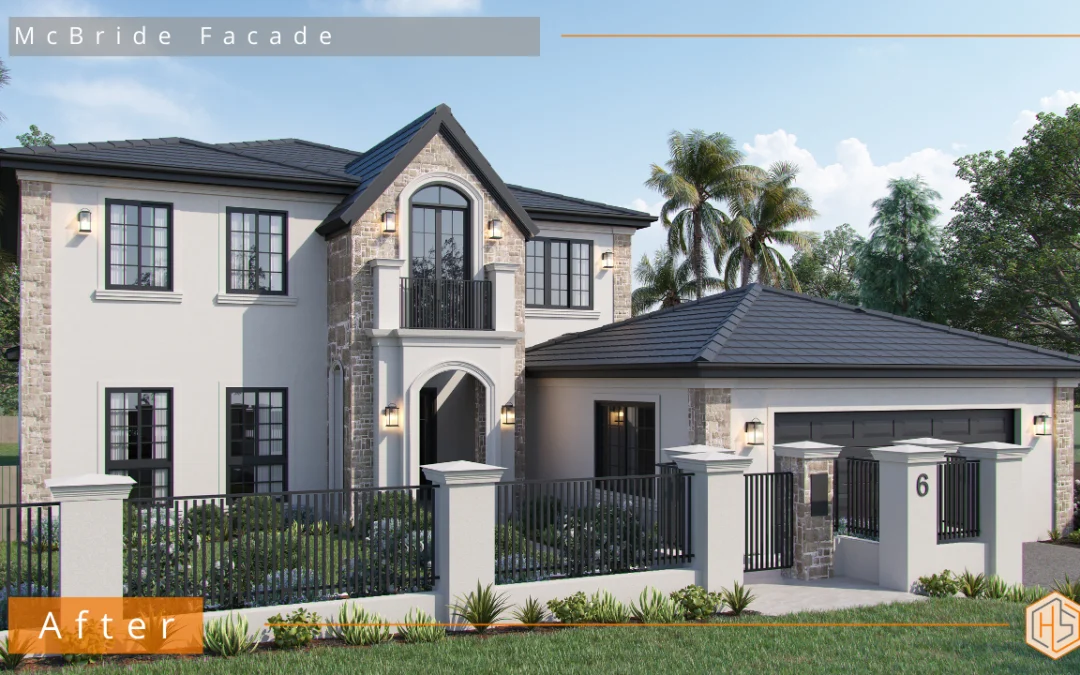
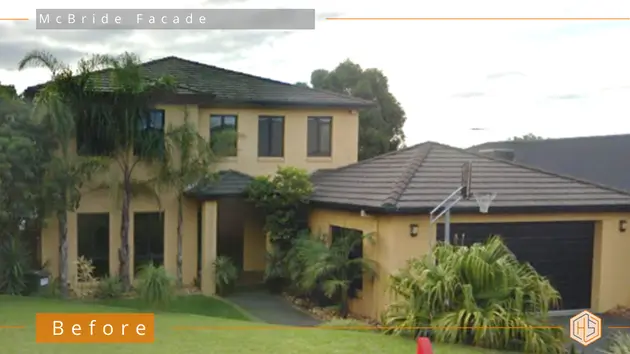
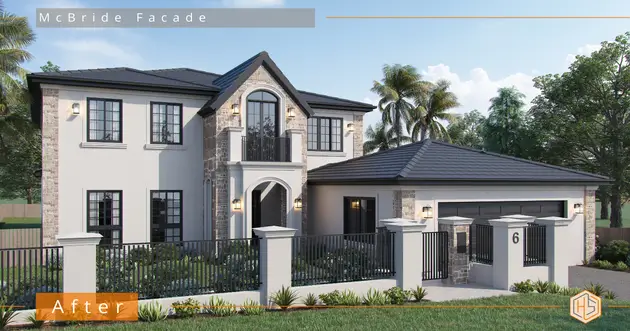
If your home feels plain or uninspired, a French Provincial design approach might be the perfect solution to add character, charm, and timeless elegance. Known for its blend of refined sophistication and rustic appeal, French Provincial design can transform a basic facade into a standout masterpiece. Here’s how you can embrace this style and create a home with lasting personality.
Start with a Strong Focal Point
The hallmark of a French Provincial home is a well-defined entryway that serves as the focal point. To achieve this:
– Consider a New Portico: A beautifully curved entrance creates an inviting and graceful aesthetic.
– Add a Juliet Balcony: Positioned above the entry, this small balcony adds a touch of romantic charm and draws the eye upward.
– Enhance the Front Door: Choose a classic timber or wrought iron door, perhaps with intricate detailing or glass inserts, to make a strong design statement.
👇👇Designed by Hotspace👇👇
Play with Textures and Materials
French Provincial homes often feature a mix of materials that add depth and interest to the facade:
– Introduce Stone Cladding: Natural or faux stone accents on pillars, walls, or around windows exude timeless sophistication and balance rustic textures with polished finishes.
– Use Rendered Surfaces: Light, neutral-coloured render creates a clean canvas that highlights architectural details.
– Consider Timber Elements: Wooden shutters or decorative beams can provide warmth and complement the natural tones of the design.
Emphasize Symmetry and Proportion
French Provincial design thrives on balance and order. To create a harmonious look:
– Reframe Windows with Trims: Adding window mouldings and trims in symmetrical arrangements gives a polished and structured appearance.
– Incorporate Matching Lantern-Style Lights: Place these on either side of the entry door or along the facade to maintain a cohesive and symmetrical look.
– Align Landscaping with Architecture: Frame your home with evenly spaced plants or hedges that reflect the symmetry of the facade.
Refine with Decorative Details
The charm of French Provincial homes lies in their delicate, thoughtful details:
– Add Ornate Mouldings: Incorporate decorative cornices or pediments above windows and doors to add flair without overwhelming the facade.
– Opt for Wrought Iron Features: Railings, gates, and window grilles in wrought iron bring an elegant, European touch.
– Install Timber Shutters: Functional or purely decorative, shutters can instantly evoke a French countryside aesthetic.
Focus on the Colour Palette
French Provincial homes are known for their soft, neutral colour palettes that exude warmth and sophistication:
– Stick to Light Colours: Creams, whites, soft greys, and beiges work beautifully to achieve a classic look.
– Add Depth with Accents: Use darker colours, such as charcoal or black, for window frames, shutters, and railings to provide contrast.
– Natural Tones for Complements: Stone and timber finishes bring balance and a grounded feel to the overall design.
Frame the Home with Landscaping
The right landscaping ties the facade together and creates a welcoming impression:
– Create a Formal Garden: Neatly trimmed hedges, topiaries, and lavender beds evoke the elegance of French estates.
– Add Paved Pathways: A stone or cobblestone pathway leading to the entrance enhances the rustic yet refined look.
– Use Decorative Pots: Terracotta or ceramic pots filled with greenery or flowers add softness and charm.
Timeless, Elegant, and Inviting
French Provincial design allows you to layer sophistication and warmth into your home, creating a facade that feels both timeless and inviting. By focusing on symmetry, incorporating decorative details, and blending natural textures with light colours, you can achieve a look that balances beauty and practicality.
Jane – https://hotspaceconsultants.com/preliminary-enquiry/
When your home feels like it’s “all roof,” choosing the right roof colours can be a game-changer in creating a balanced and visually appealing facade.
Large, low-slung rooflines often dominate the view, leaving the rest of the home overshadowed. But while roof colours are a crucial element in addressing this, they’re only one part of the equation when transforming a home with a visually heavy roof.
👇👇Designed by Hotspace👇👇
Roof Colours: An Important Starting Point – The colour of your roof can significantly impact how your home looks and feels. A well-chosen roof colour can help balance the proportions of your home and shift focus toward other design elements. For homes with a lot of visible roof area, neutral or muted colours are often the best choice to reduce the visual weight and avoid an overpowering appearance.
Here are a few tips for selecting roof colours:
– Find the Right Contrast: A darker roof can provide a striking contrast to lighter-coloured walls, while a lighter roof can soften the look of darker exteriors. For a home with a large roofline, neutral greys, charcoals, or soft earthy tones can be an effective choice.
– Consider the Architectural Style: The roof colour should complement the overall style of your home. Modern homes often look great with cooler tones like grey, while traditional homes may suit warmer colours.
– Blend with the Environment: Think about how your roof fits into the surrounding landscape. Natural tones that harmonise with greenery or other outdoor elements can make your home feel grounded and well-integrated into its setting.
– Energy Efficiency Matters: In hot climates, lighter roof colours can reflect sunlight and keep your home cooler, reducing energy costs over time.
Beyond Roof Colours: The Full Picture – While roof colour plays an essential role, there’s much more you can do to transform a house where the roof feels too dominant. Other strategies include:
– Creating a Strong Entrance: Adding or upgrading a front portico or entranceway can draw attention away from the roof and toward the main focal point of the home. Consider larger columns, striking front doors, or inviting landscaping to enhance the entry.
– Using Materials and Textures: Introducing new cladding, stone, or timber elements can break up the facade and add depth. Mixing materials and textures not only reduces the focus on the roof but also creates a more dynamic and visually interesting exterior.
– Strategic Landscaping: Thoughtfully designed landscaping can soften the look of a large roof. For instance, layering greenery in front of the facade can guide the eye and create balance between the roof and the lower half of the home.
– Adding Windows or Features: Larger windows or additional architectural details such as gables (as in the example image above) or decorative trims can help redistribute attention and add charm to the overall design.
Roof Colours Are Just One Piece of the Puzzle – Addressing the issue of a visually dominant roof requires more than just picking the perfect roof colour—it’s about seeing the home as a whole and considering how each element works together. While choosing a roof colour is an important starting point, pairing that choice with thoughtful updates to materials, landscaping, and architectural features will truly transform your home.
So, if you find yourself staring at a house that feels “all roof,” don’t worry—there are plenty of ways to balance the look, improve the proportions, and create a facade that’s as beautiful as it is functional. Roof colour is just the beginning of what’s possible.
Jane – https://hotspaceconsultants.com/preliminary-enquiry/

There comes a pivotal moment in the process of building a home when your drafty, builder, or even your architect asks the big question about your new home exterior colour scheme: “What colours do you want to use?”…
For many homeowners, the immediate reaction is to dive into their Pinterest board, piece together a few ideas, and hope for the best. You might cobble together a colour scheme, perhaps throw in a few thoughts about the yard or the fence. But here’s the problem—you don’t really know how it’s all going to look until it’s finished. And by then, it might be too late.
👇👇Designed by Hotspace👇👇
Your new home’s exterior isn’t just the first thing people see—it’s the key to creating a cohesive, welcoming look that reflects your style. A poorly thought-out colour scheme can leave you feeling disappointed or stuck with costly mistakes that are hard to fix.
I hear from dozens of homeowners every year who regret their initial choices. They reach out to me for help to fix up their house exteriors, often wishing they’d taken the time to plan their new home exterior colour scheme properly from the start.
If you’re planning your dream home, you deserve to feel confident in your choices. While many builders and architects may not offer a custom design and colour illustration, that’s where I come in.
A custom design and colour illustration allows you to see exactly how your selections will look before a single brushstroke or material is applied. It eliminates guesswork and ensures your finished home will match your vision.
I incorporate everything you’ve already chosen or planned for your home during your process so far. And I work with your favourite colours and materials to create a cohesive look. I design a scheme that’s both timeless and tailored to your style.
Don’t let your dream home turn into a design disappointment. With a little planning and the right tools, you can create a home exterior that you’ll love for years to come.
If your builder, drafty, or architect doesn’t offer a custom design & colour illustration, and you want one, you know who to call (it’s me, in case you were wondering). Let’s make your new home colour scheme ideas as amazing as they deserve to be.
Contact me today to create a custom design and colour scheme that brings your dream home to life. No regrets, just results you’ll love.
Have questions? Send me an enquiry via the link below.
Jane
https://hotspaceconsultants.com/preliminary-enquiry/